
An Online Book Store and Website: The Great Poop Book
We developed for Gal Alon, author of The Great Poop Book (thegreatpoopbook.com), a clean-code Laravel store that replaced a cluttered WordPress and WooCommerce site: the book at the centre, quick buy straight to payment, a secure hosted payment page, a full admin panel and a customer account area.
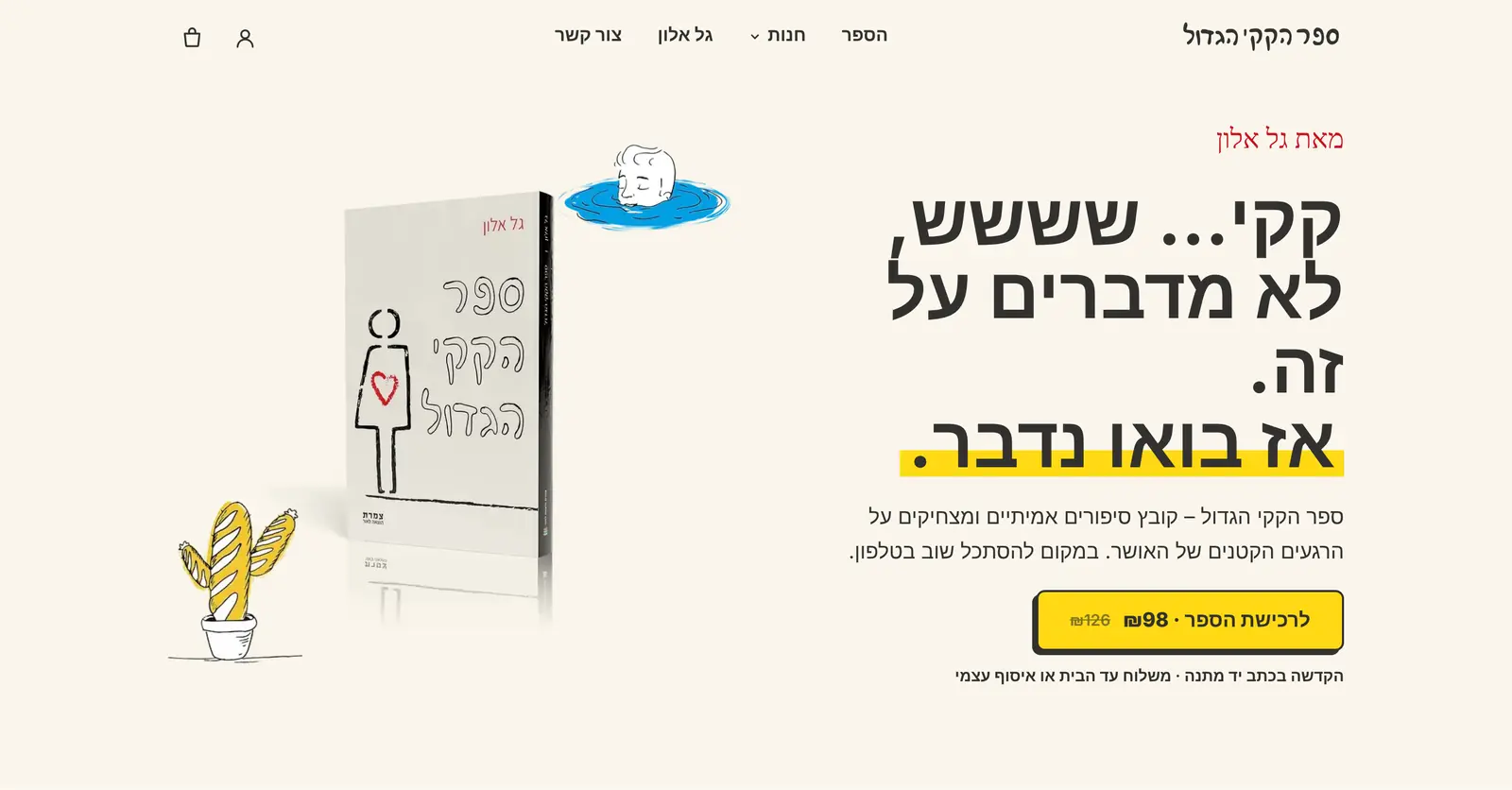
01. Background and challengeA cluttered WordPress site that hid the star: the book
The previous site was built on WordPress and WooCommerce, and over the years it had gathered many products, a permanent coupon strip at the top of the page, long texts at the bottom and a heavy preloader between pages. The book itself, the product people come for, got lost, and the main purchase button was a small text link.
Gal Alon's The Great Poop Book is a humour book that already sits in thousands of homes, and its website had to be as simple as it is: see the book, smile, buy. The challenge was to build a clean, fast site without losing what already worked.
The main challenges:
- The book at the centre: a prominent buy button and a visible price instead of a small text link, and a page that leads to it without distractions.
- The character of the book: the illustrations, the colours and the humorous tone had to stay and become the visual language of the whole site.
- Existing search visibility: product URLs that already rank on Google had to be kept, and every URL that changed needed a redirect.
- Payment that works from day one: secure payment, verification with the payment company and a test mode kept separate from live mode.
- Shared hosting: an ordinary DirectAdmin server, with no dedicated server, no Composer and no terminal.
02. Our approachThe book at the centre, and everything else works for it
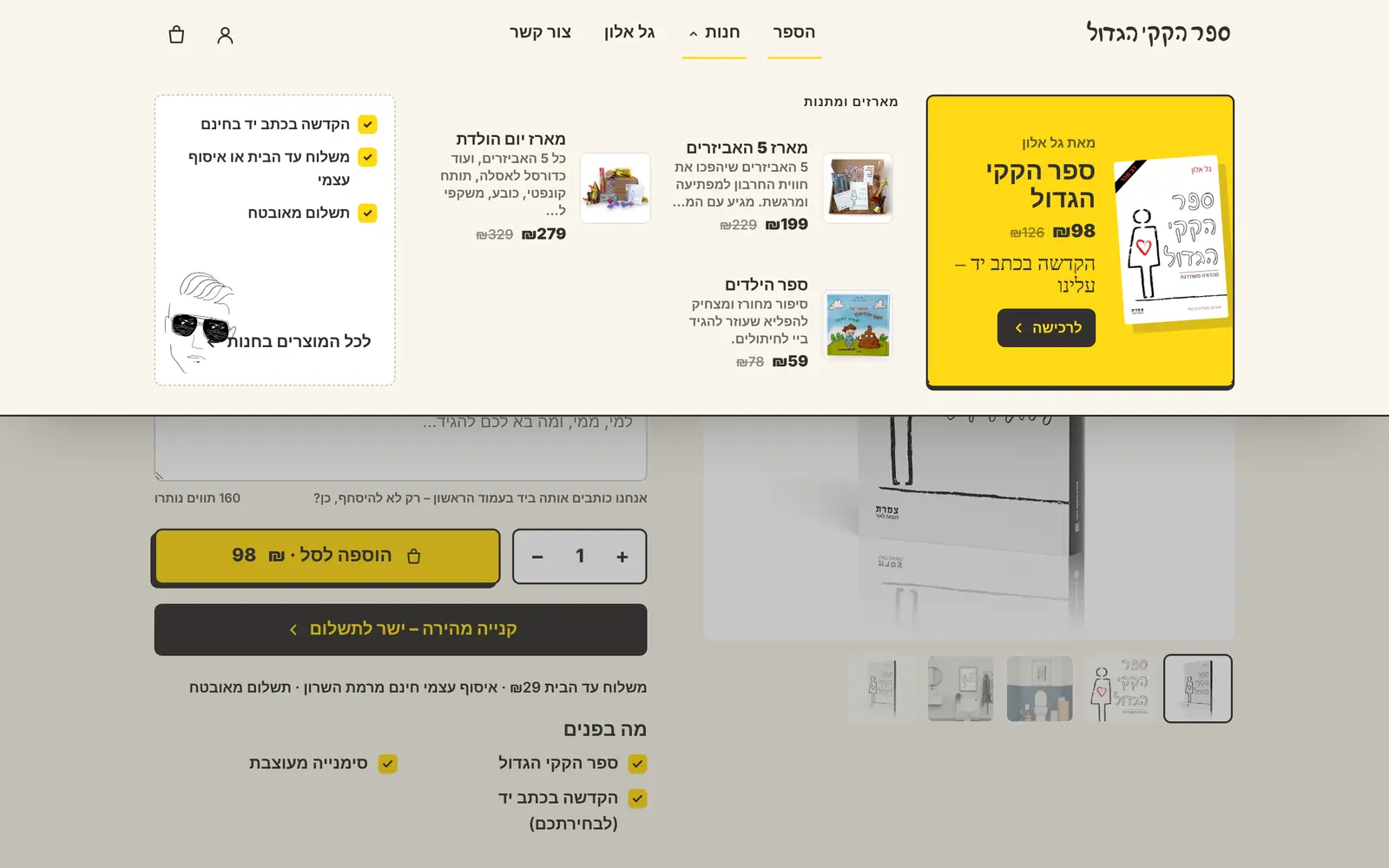
We started with design: we presented two versions of every page type (home, product, shop and checkout) and chose the clean direction together with the client. The book took centre stage with a prominent buy button, the range was cut to four products only (the book, the 5-accessories set, the toilet birthday set and the children's book), and the original illustrations became the visual language of the whole site.
Then we wrote the system itself in Laravel, in clean code and with no build step: plain CSS and JavaScript, a database installed by importing a single SQL file, and every sensitive setting, payment and mailing, editable from the admin panel rather than from the code.
Finally came deployment: uploading to the hosting, testing payment in test mode, switching to live mode and activating the redirects from the old URLs, so that the switch would be smooth for customers and for Google.
03. One product at the centreHow to build a store around a star product
When one product is the star, every page has to lead to it. That is why we built the store around as few steps as possible between wanting to buy and paying, and placed every extra where it helps rather than gets in the way.
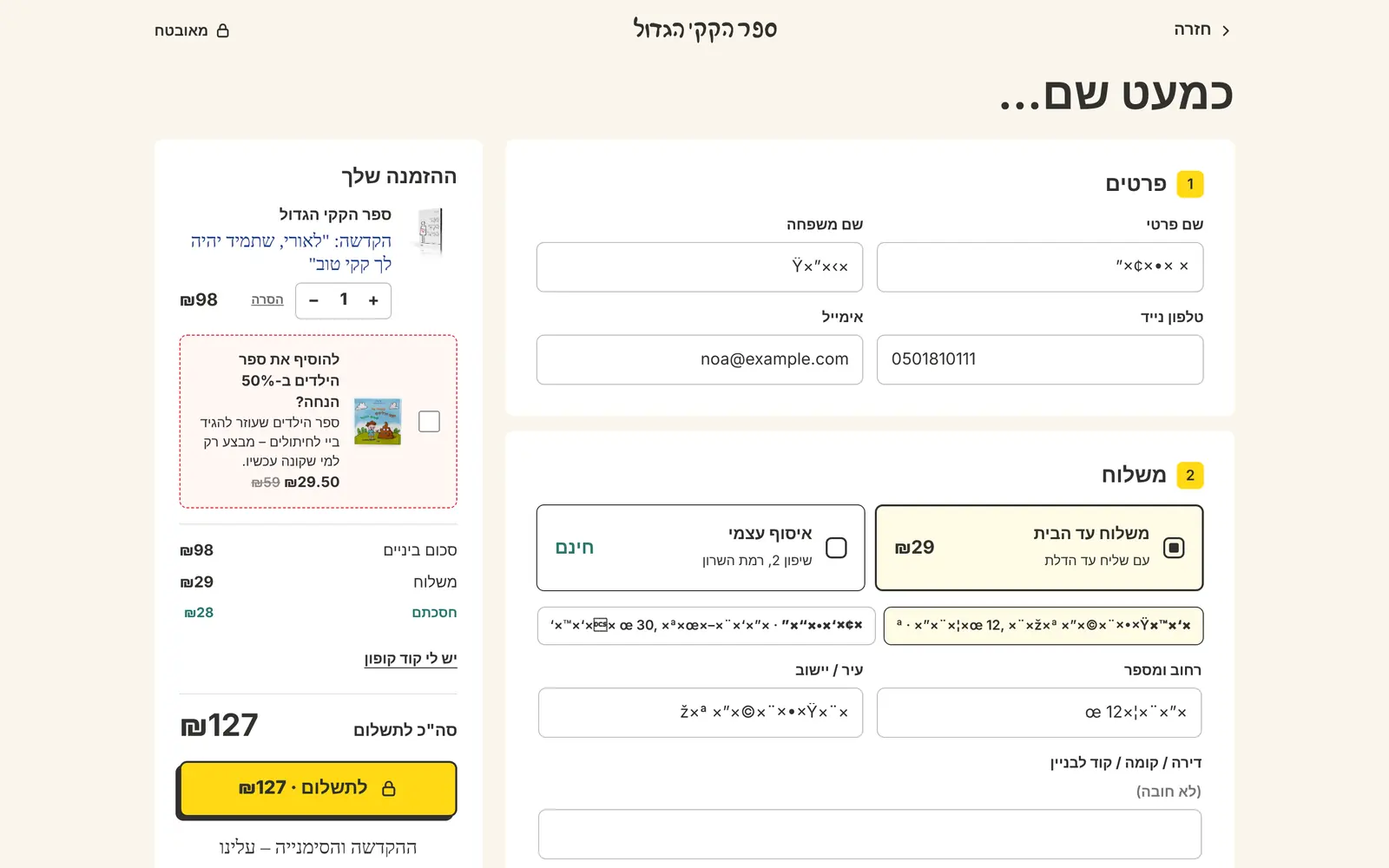
- Quick buy: a button on every product that goes straight to the payment page, without passing through a separate cart page.
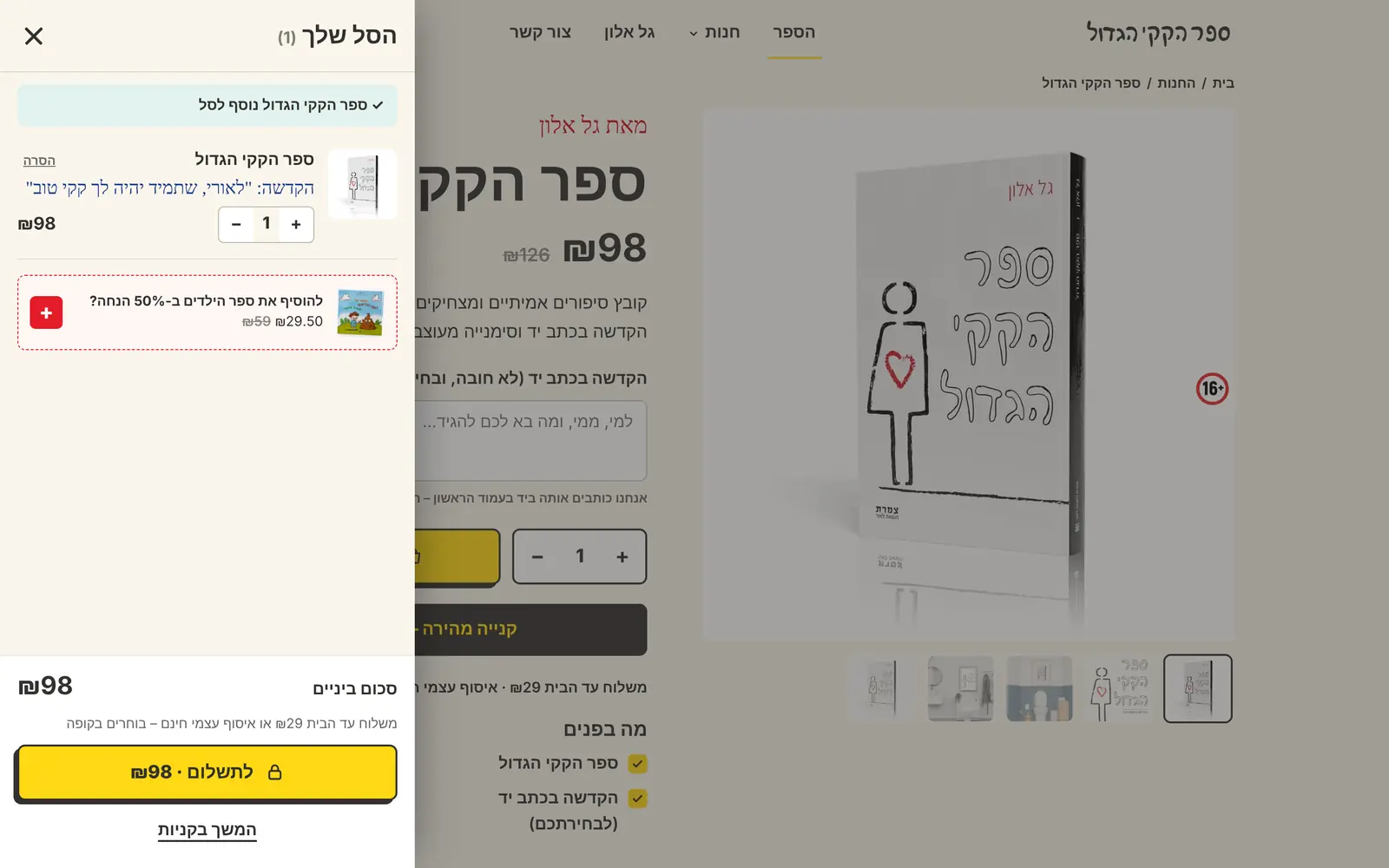
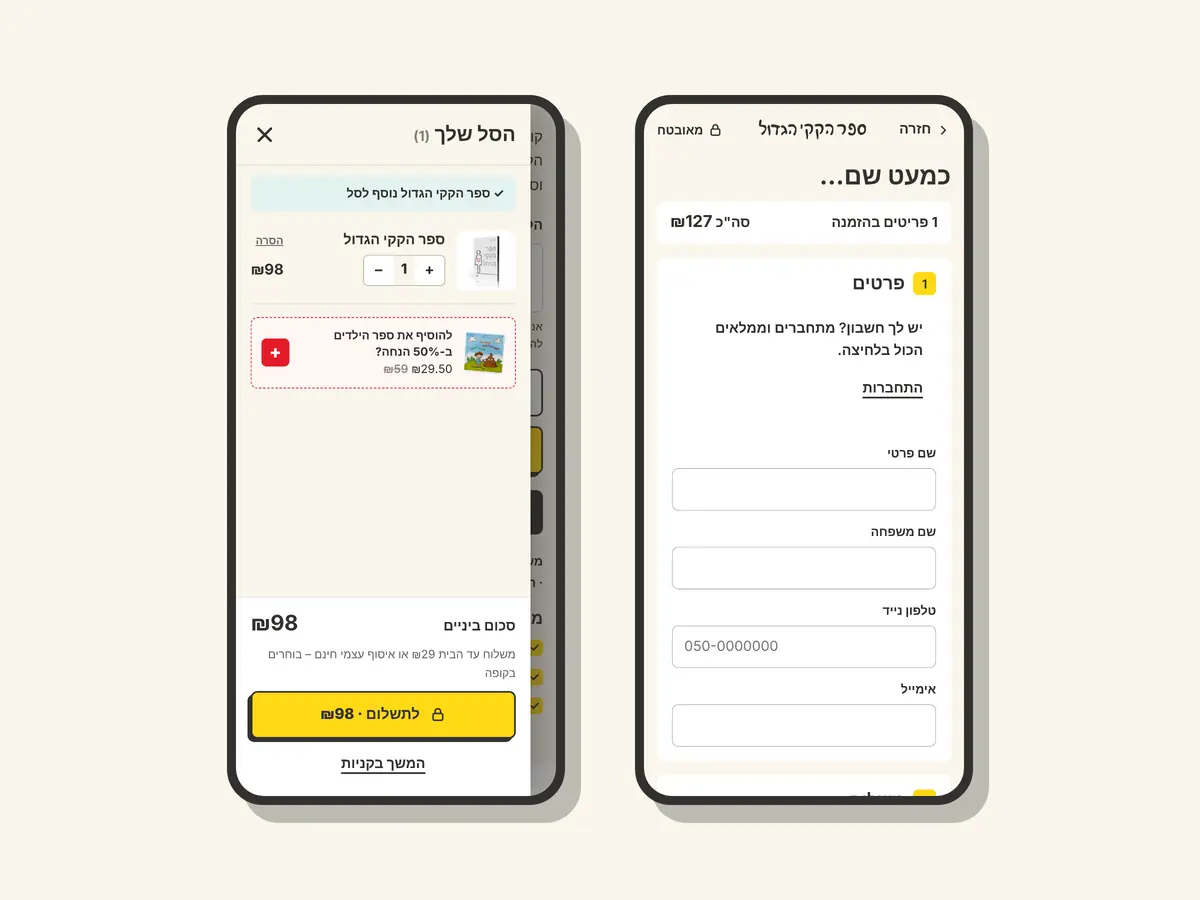
- Side cart: a drawer that opens without leaving the page, so the customer can keep browsing and adding.
- A handwritten dedication: the customer writes a personal dedication and sees a preview in a handwriting font while typing.
- A smart offer in the cart: the children's book at 50% off, right when the customer has already decided to buy.
- Delivery as needed: home delivery, self pickup or direct delivery as a gift, and coupons for campaigns.
The decision to offer the extras inside the cart rather than on the home page is deliberate: on the home page they are noise, and in the cart, after the customer has already chosen, they are an offer that is easy to say yes to.
04. Payment, customers and securitySecure payment and bot-protected registration
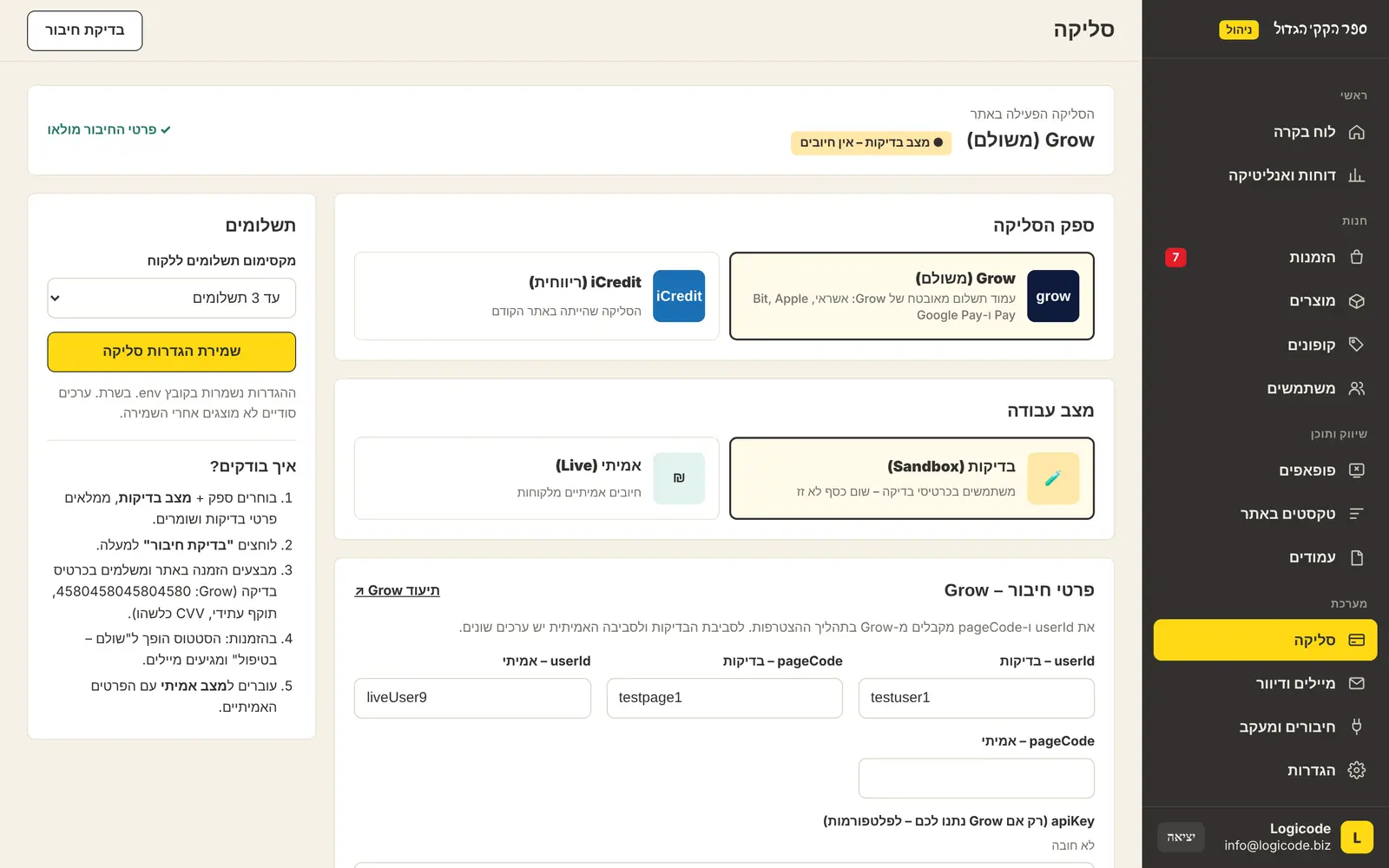
Payment takes place on the payment company's secure hosted page: the customer goes there and returns to a thank-you page on the site. The site does not store card details and does not mark an order as paid until it verifies the payment directly with the payment company. The site owner chooses between Grow and iCredit, and between test and live mode, from the interface, and can test the connection with one click.
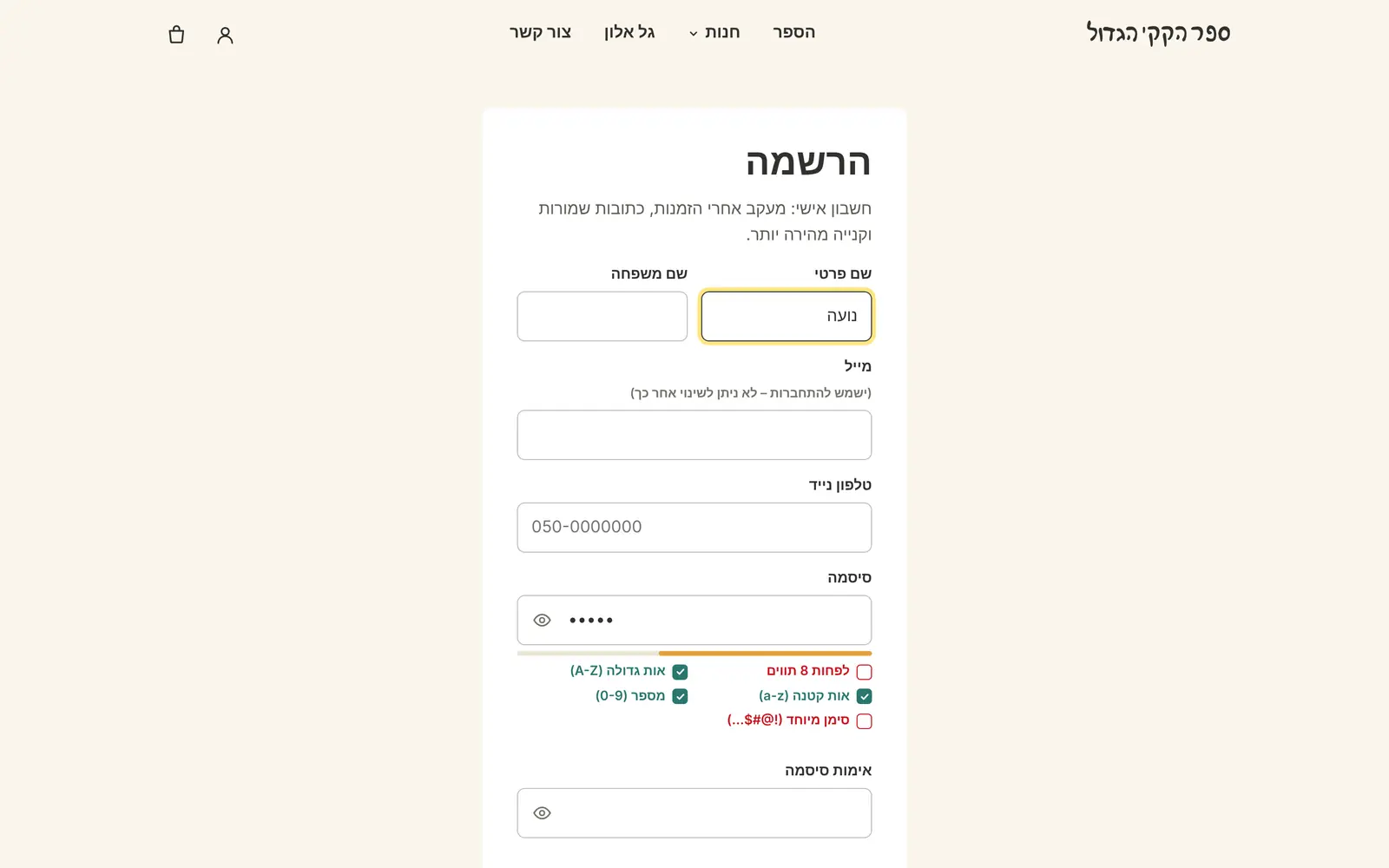
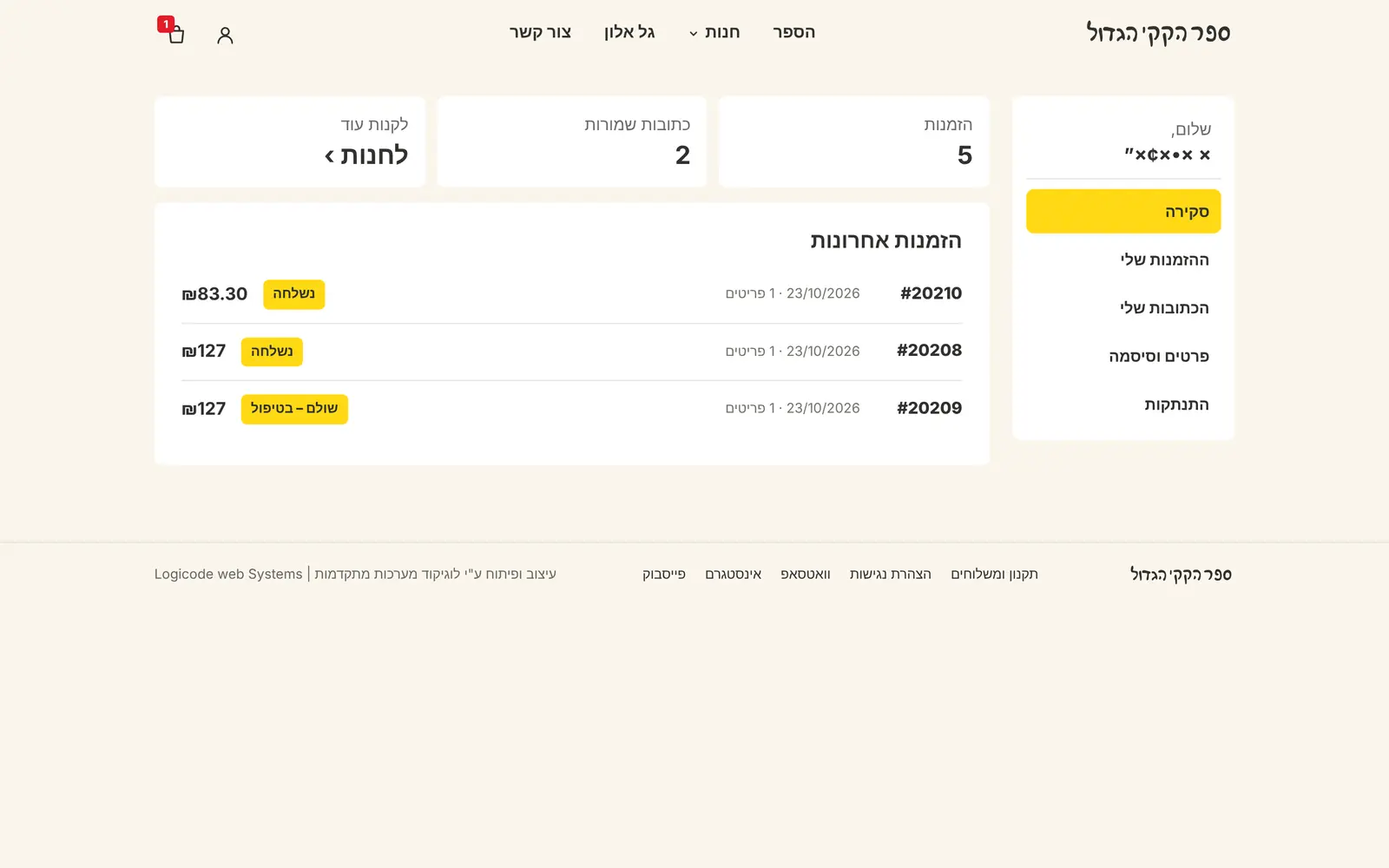
Registered customers get an account area with orders, saved addresses, details and password, and at checkout the details and address are pre-filled. So that registration does not become a target for bots, we built several layers of protection: a honeypot field, a time check, a calculation challenge and Turnstile, alongside a password policy with live feedback while typing and a limit on attempts for every form.
05. Shared hostingA full system installed without a terminal
The site is hosted on shared hosting running DirectAdmin: files are uploaded through the file manager and the database through phpMyAdmin, with no Composer and no terminal. This is a constraint that affects every decision, so the system was written to be installable without build tools: code that is ready to upload and a database installed by importing a single SQL file.
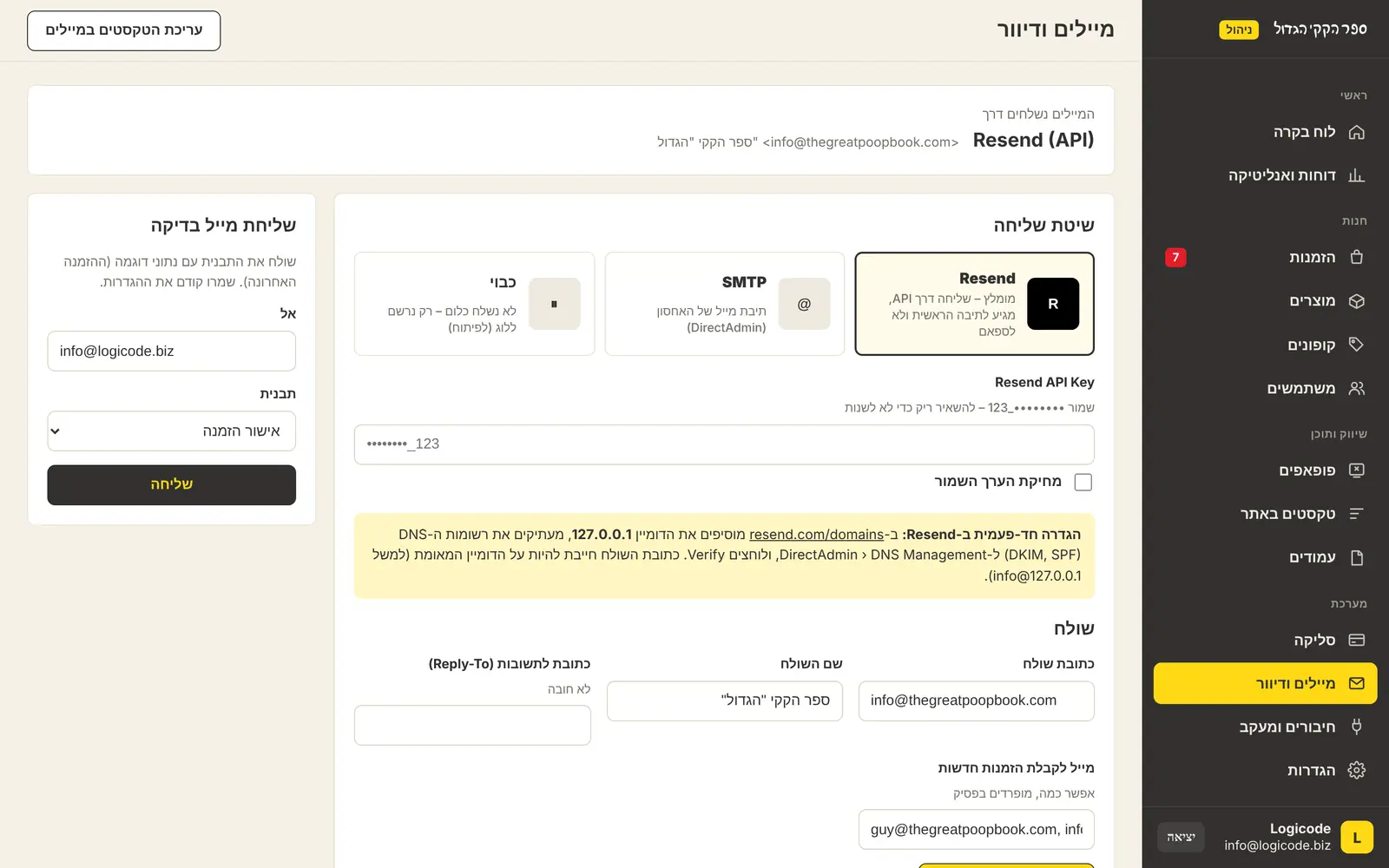
The settings that would normally need a configuration file, such as the payment provider, the working mode, sending email through Resend and the mailing details, are edited from the admin panel. The site owner changes them alone, without touching the server and without calling a developer for every change.
06. SEO and the move from WordPressA move that keeps what Google already knows
In a move from WordPress the first thing to check is the URLs. The product URLs were kept exactly as on the previous site, and every old URL that changed was given a 301 redirect to the matching page, so the existing rankings and links keep working.
On top of that came a sitemap, structured data for the product pages and commerce events for Google Analytics 4 and Meta, with Tag Manager and Search Console connected from the interface. There is no promise of ranking, but a sound structure, stable URLs and reliable measurement are the condition for competing and for understanding where sales come from.
The engines behind the project
Everything we built for The Great Poop Book, from the store the customer sees to the tools the site owner works with.
A design derived from the illustrations
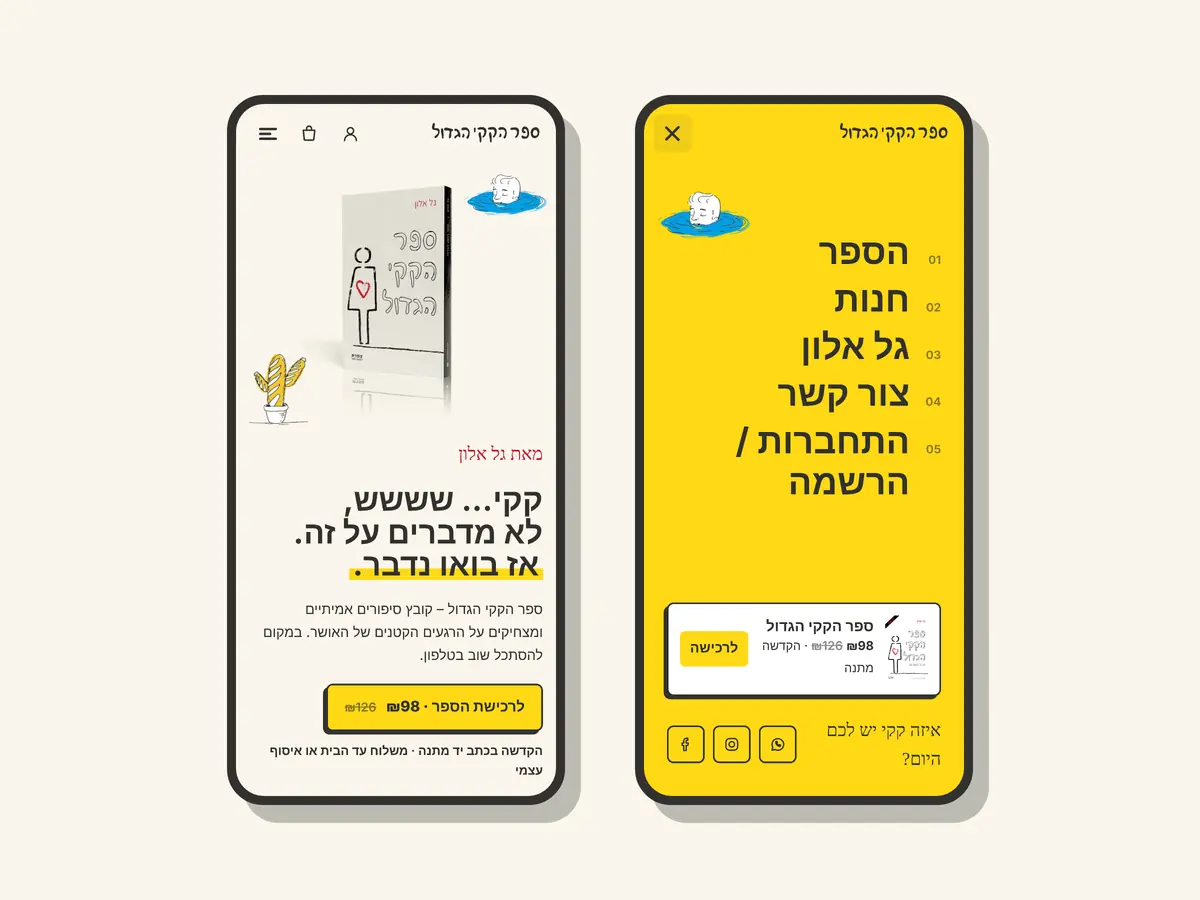
An animated preloader built from the logo, and a shorter version on a return visit. An animated mobile menu and a store mega menu that opens on hover. A handwriting font, a yellow marker and the book illustrations on every page, fully adapted to mobile, tablet and desktop.
A fast buying experience
Quick buy from every product straight to the payment page, a side cart drawer, a handwritten dedication with a preview, a smart offer in the cart, coupons, home delivery, self pickup and direct delivery as a gift.
Payment on a secure hosted page
Connections to Grow and iCredit that you switch between in a click, test and live modes, a connection test from the interface and verification of the payment with the payment company before an order is marked as paid. The site does not store card details.
A full admin panel
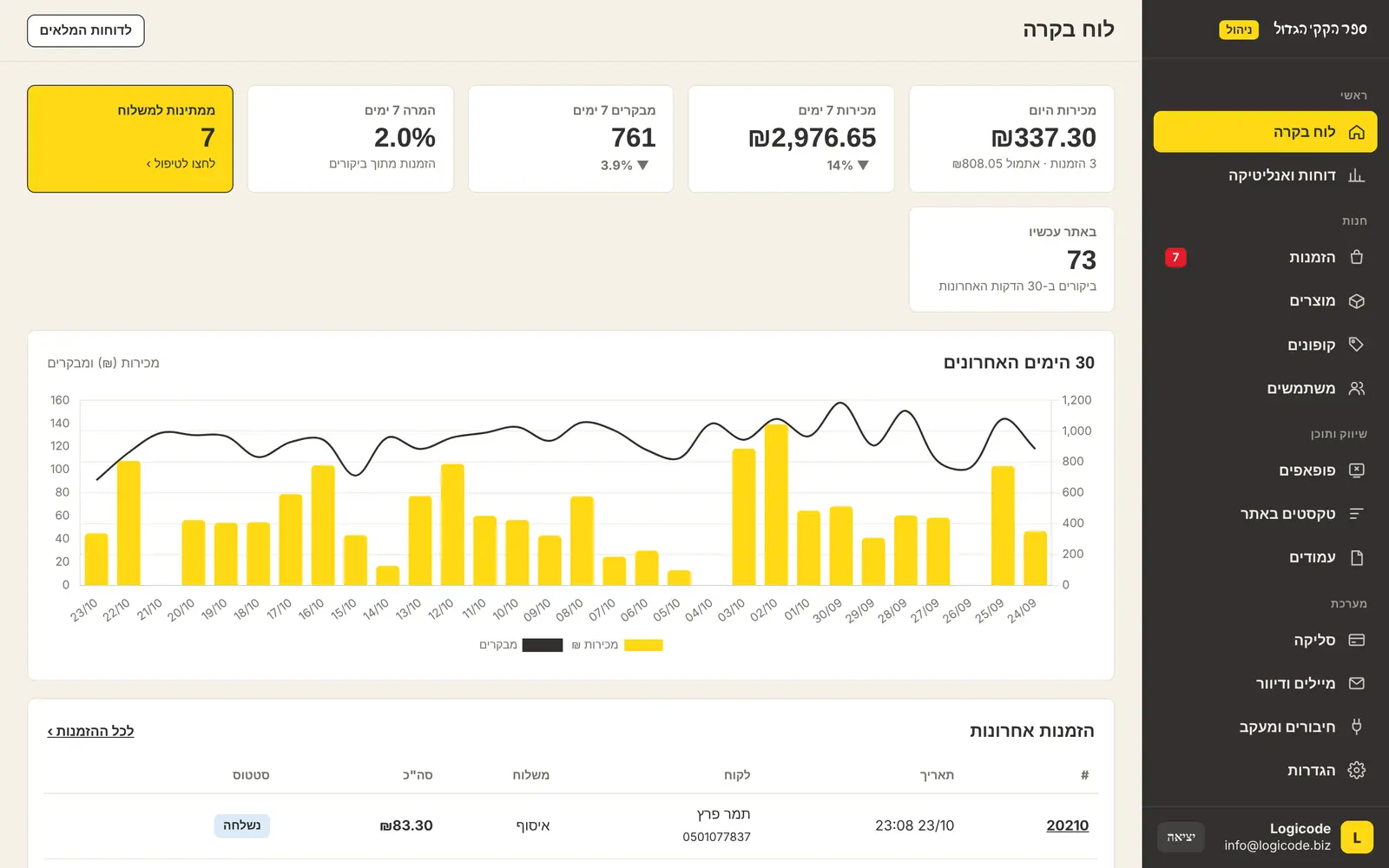
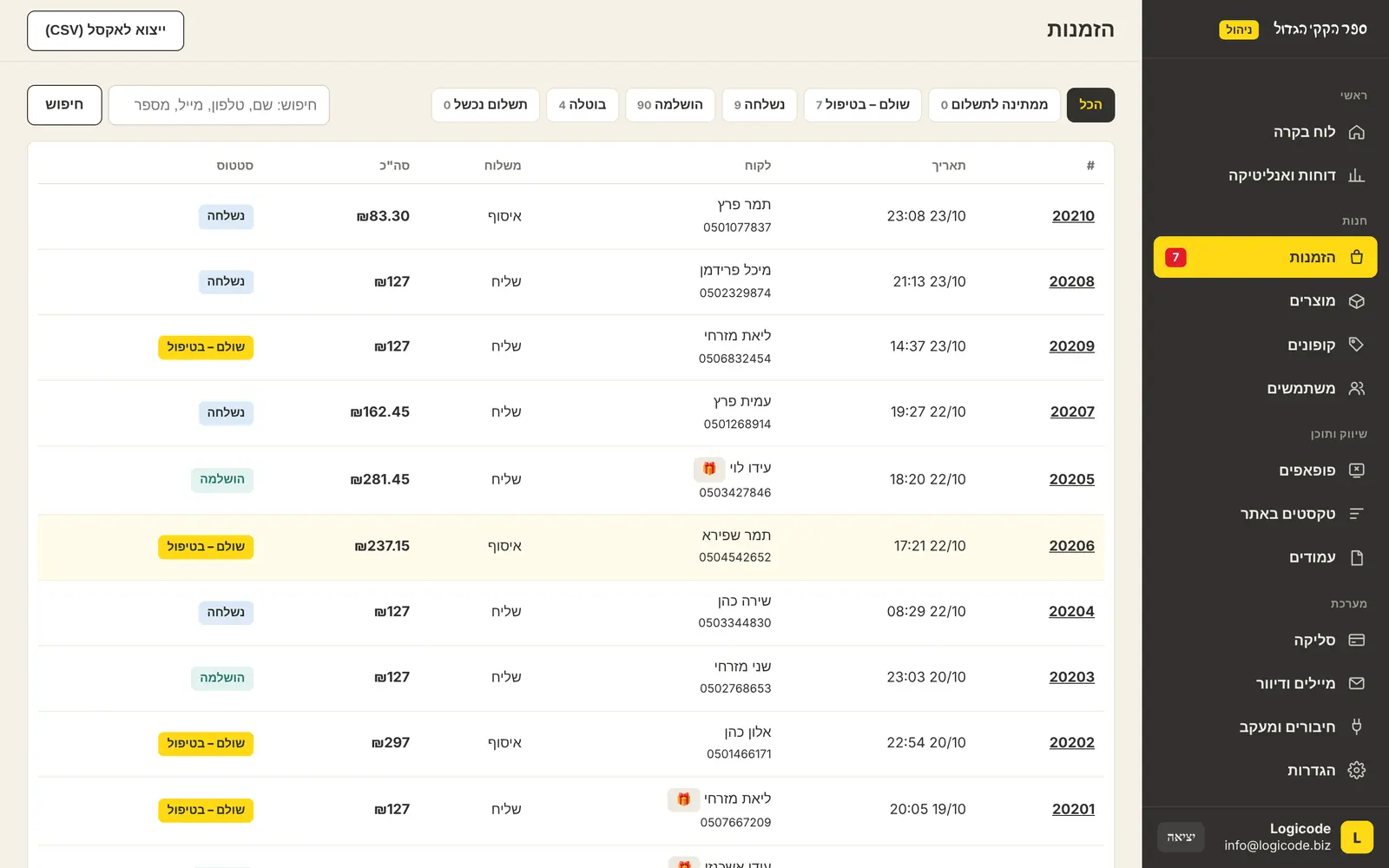
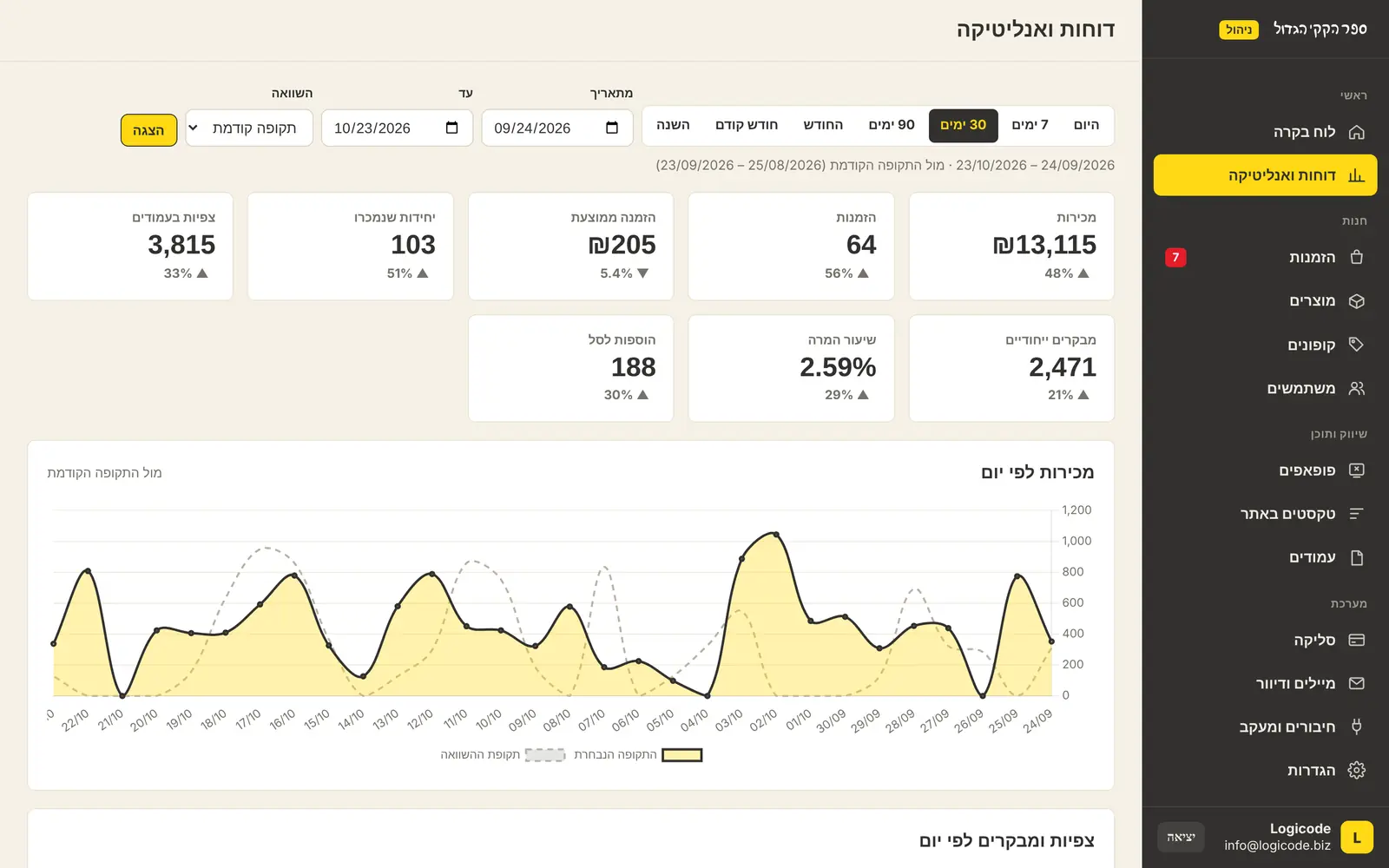
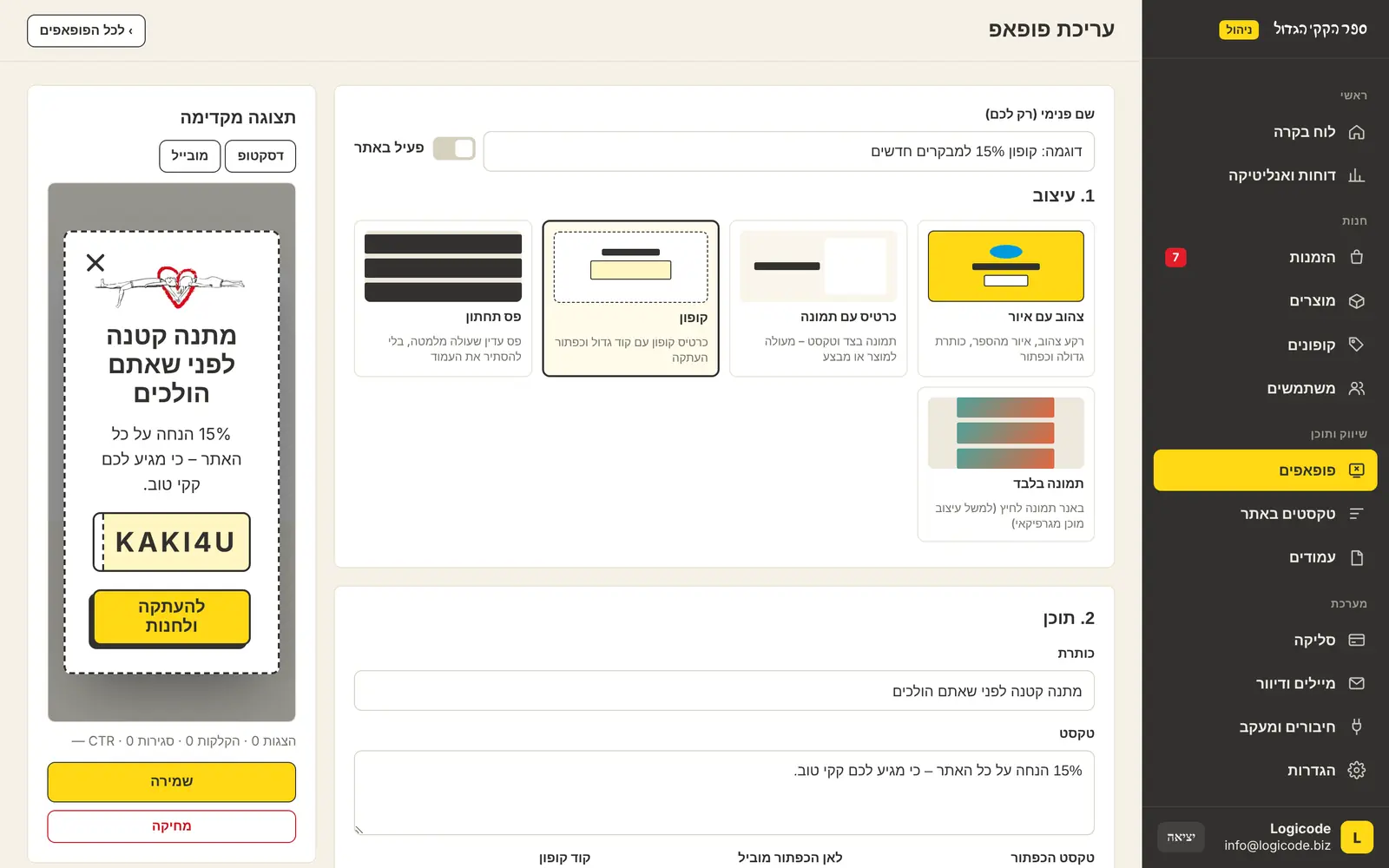
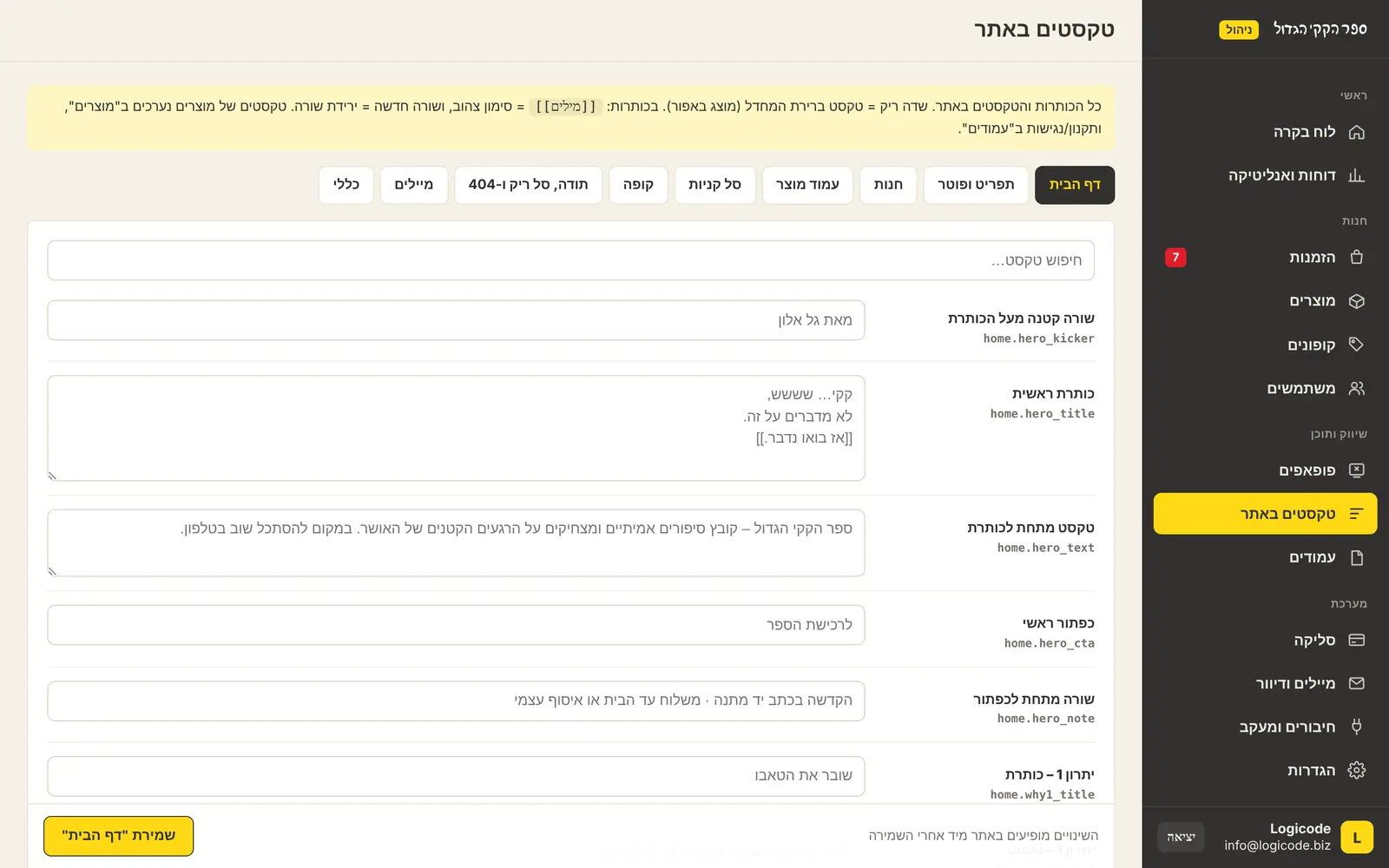
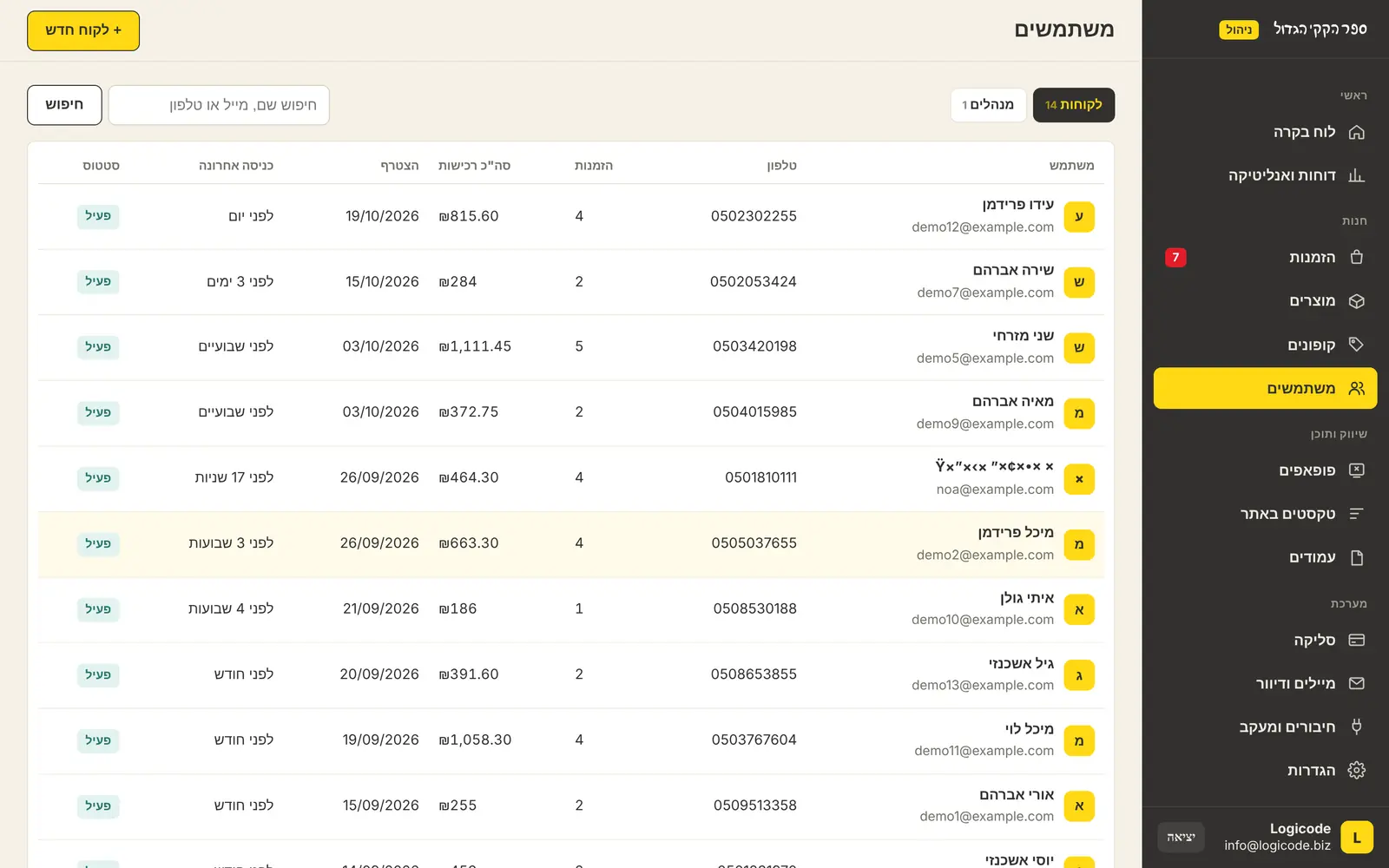
Orders, products, coupons, users and pages in a tidy side menu. Editing of every heading and text on the site, including the emails. A popup builder with 5 designs, page targeting, frequency and dates, and internal reports with views, sales, a purchase funnel and period comparison.
Registered customers and security
An account area with orders, saved addresses, details and password, and pre-filled details at checkout. Bot protection at registration: a honeypot, a time check, a calculation challenge and Turnstile, a password policy and an attempt limit on every form.
Emails, measurement and SEO
9 designed email templates, from order confirmation to "your order is on its way", sent through Resend with a preview and a test send from the interface. Connection to Google Analytics 4, Tag Manager, Meta Pixel and Search Console, a sitemap, structured data and 301 redirects.
A look inside the store
Screenshots from the live store of The Great Poop Book.
A look inside the admin panel
The site owner manages orders, content, popups, payment and reports from the same place.
The store on mobile
The same store and account area on mobile: large buttons and few steps to payment.
Instead of a WordPress site that needs plugins, updates and maintenance, The Great Poop Book now has a single clean-code system that the site owner runs alone: changing texts, launching a sale popup, switching payment provider, sending an "order on its way" email and seeing in the reports what sold and where visitors came from, without calling a developer for every change.