Business branding and UX/UI design

We build a complete brand, from the logo to the brand book and design system, and design website and app interfaces that are a pleasure to use. A software development company from Haifa that holds both the design and the code, so what is designed is what gets built.

Business branding that is far more than a logo

A logo is only the sign. A brand is the promise the customer feels at every touchpoint with you: in color, typography, tone of voice, the website, the business card and the app. Proper business branding starts with strategy, who you are, who you speak to and what makes you different, and only then moves on to design.

The result is a complete, consistent brand identity: a logo in versions for every use, a color palette, typefaces, icons, a brand book and a design system from which a website and an app can be built. Every touchpoint then looks and feels like the same business.

See the branding projects in our portfolio

UX/UI design that leads the visitor to act

UX design is the experience: how a user finds what they came for, how many taps it takes to order and what happens when they make a mistake. UI design is what they see: the buttons, text, colors and spacing. Together they decide whether a website or app creates enquiries or loses customers.

We start from the user and the business goal, build flows and an interactive prototype, and design every screen in the language of the brand. The design is accessible from the start, in line with the Israeli standard and WCAG, and is delivered as a design system that our developers implement in clean code.

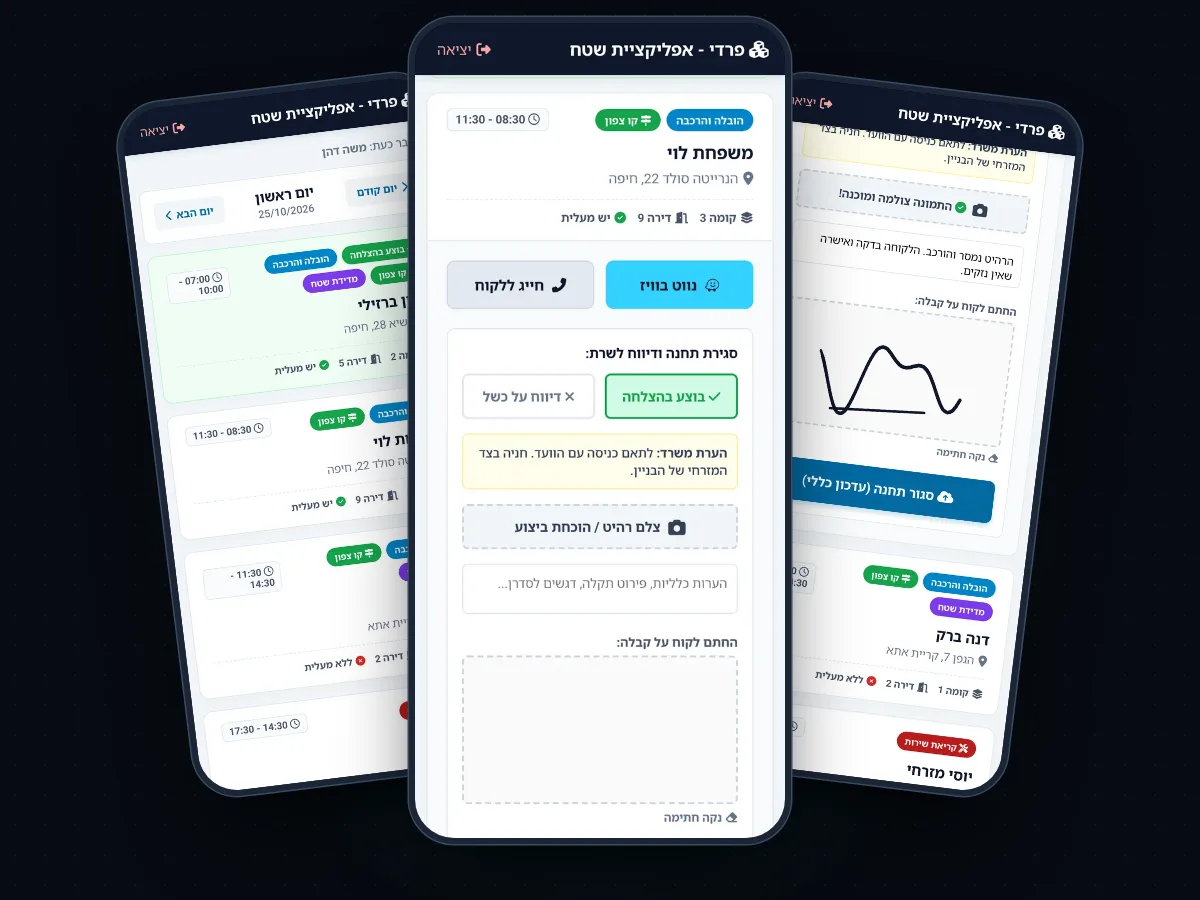
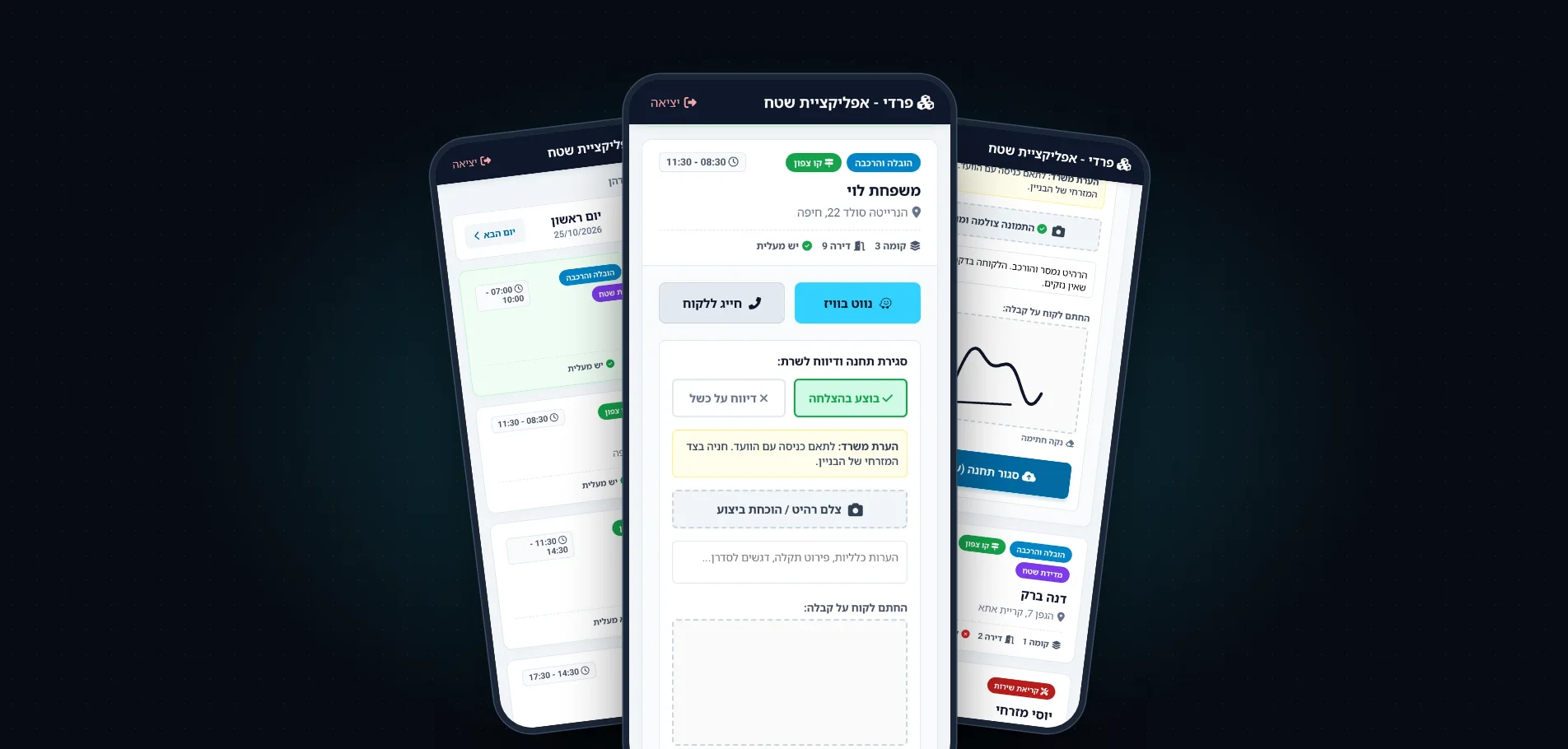
UX/UI design of a field app: driver and measurer screens

What does the branding service include?

Every project is tailored to the business, but these are the components of a complete brand that also works in the digital world.

Brand strategy and positioning

An analysis of the audience and competitors, and a definition of values, message and tone of voice. Design decisions are tested against the strategy, not against personal taste.

Logo and brand mark

An original mark in versions for dark and light backgrounds, horizontal and stacked, and as a symbol only for icons and stamps, in vector files.

Color and typography

A defined palette with usage ratios and accessible contrast, and typefaces that support Hebrew and English and load fast on the website.

Brand book

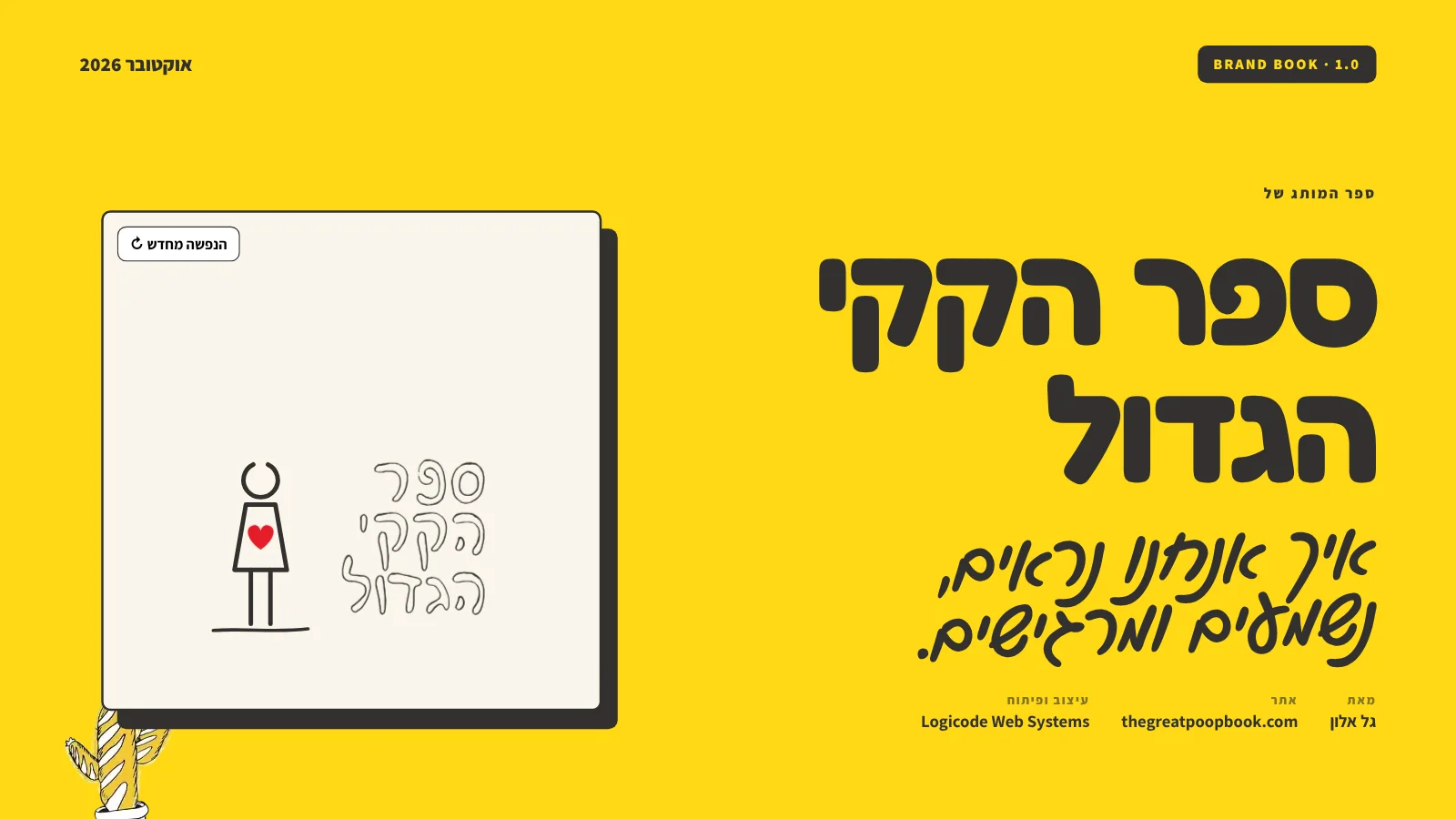
A document that explains how to use the identity: strategy, logo, colors, typefaces, icons, application examples and what not to do.

A digital design system

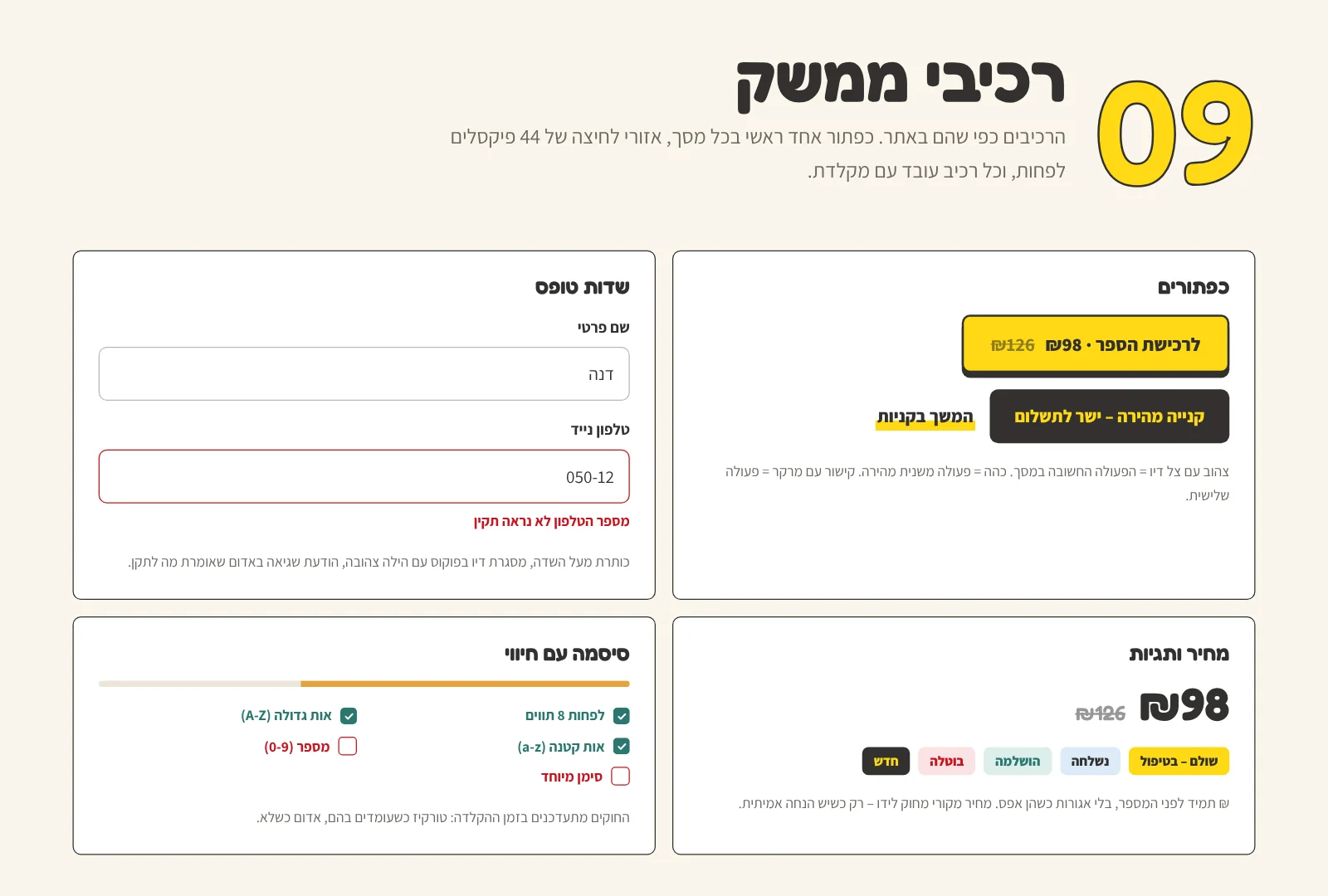
Components, spacing and styles that define a button, a form and a card once, so every page and screen is built in the same language.

Digital and print applications

A business card, stationery, social media, presentations, a website and an app, so the brand appears consistently wherever customers meet you.

Brands we created

Four complete brand identities, each from a different field. Open any of them for the full story: the challenge, the design decisions and the deliverables.

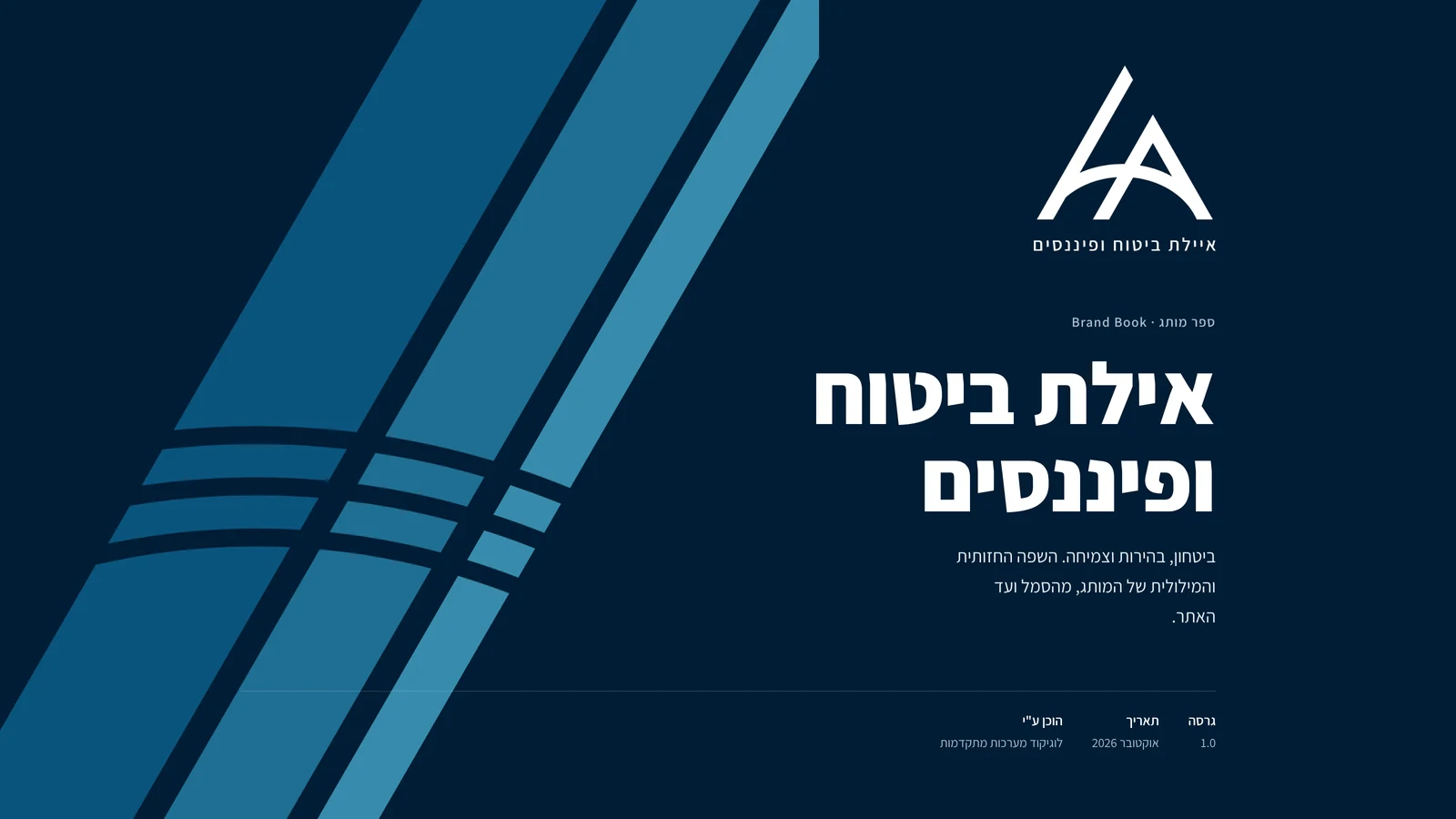
Branding an insurance agency

Ayelet Insurance and Finance: a full language around an existing logo

Without changing a single line of the logo we built a complete identity: a symbol analysis, three brand values, a blue palette, a typeface, 8 logo versions, 15 icons, a brand book and a design system for the website.

Read the case study
Branding a law firm

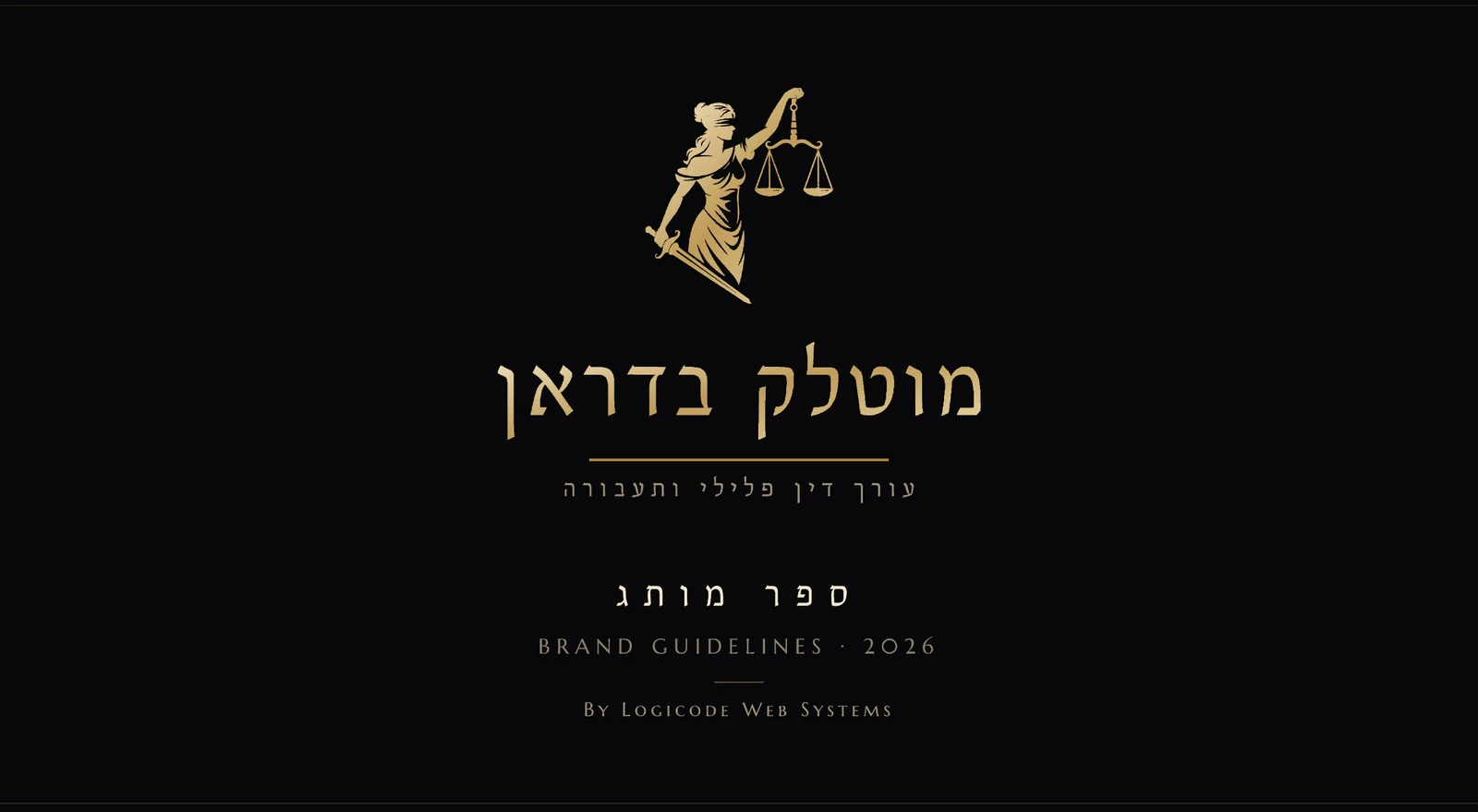
Motlak Badran: quiet authority, gold on matte black

An identity built around an illustration of Lady Justice in a fine gold line: six logo versions, a palette of golds and a sand tone, three serif typefaces, and business cards, stationery, a website and social media.

Read the case study
Branding an accounting firm

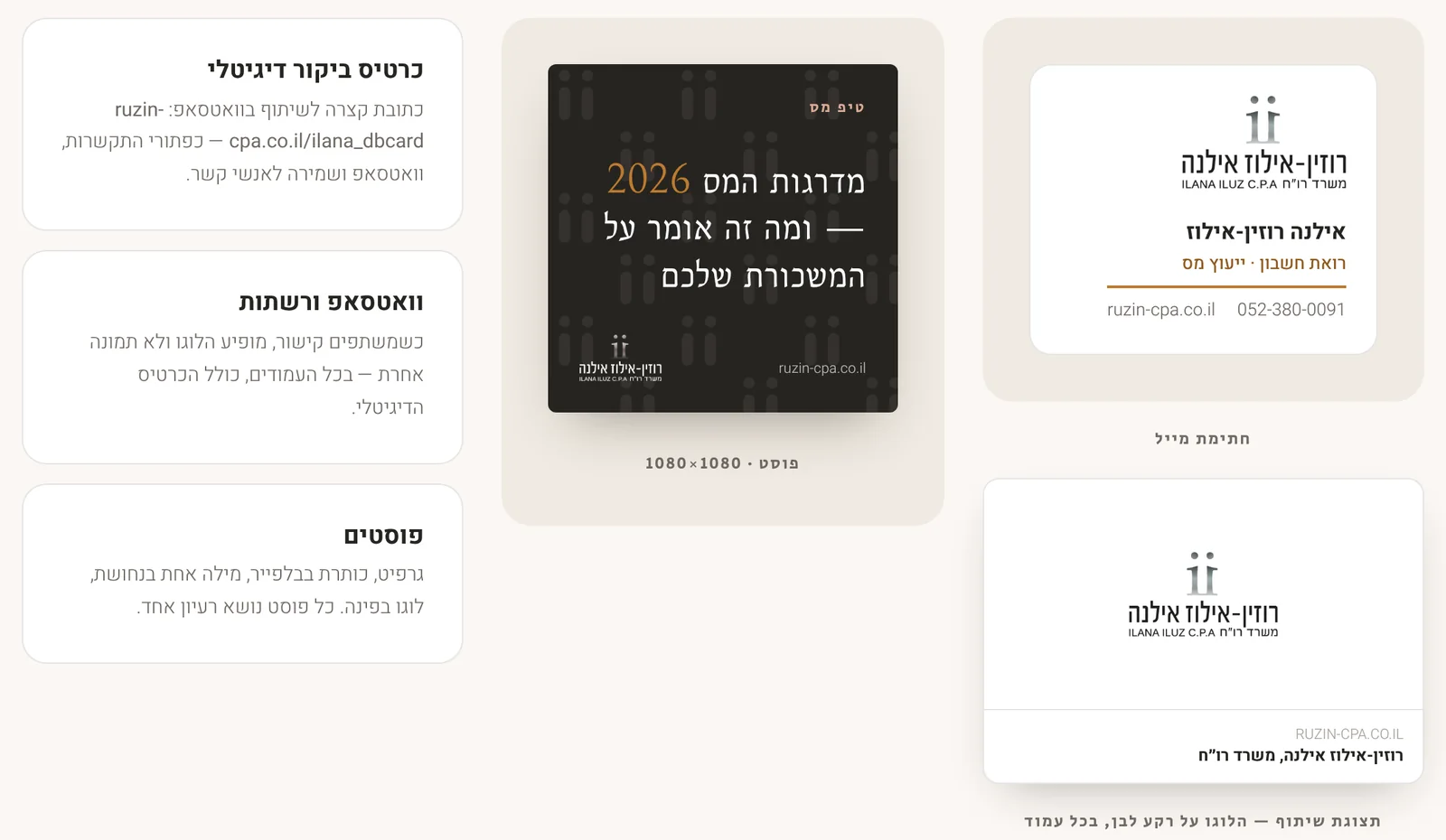
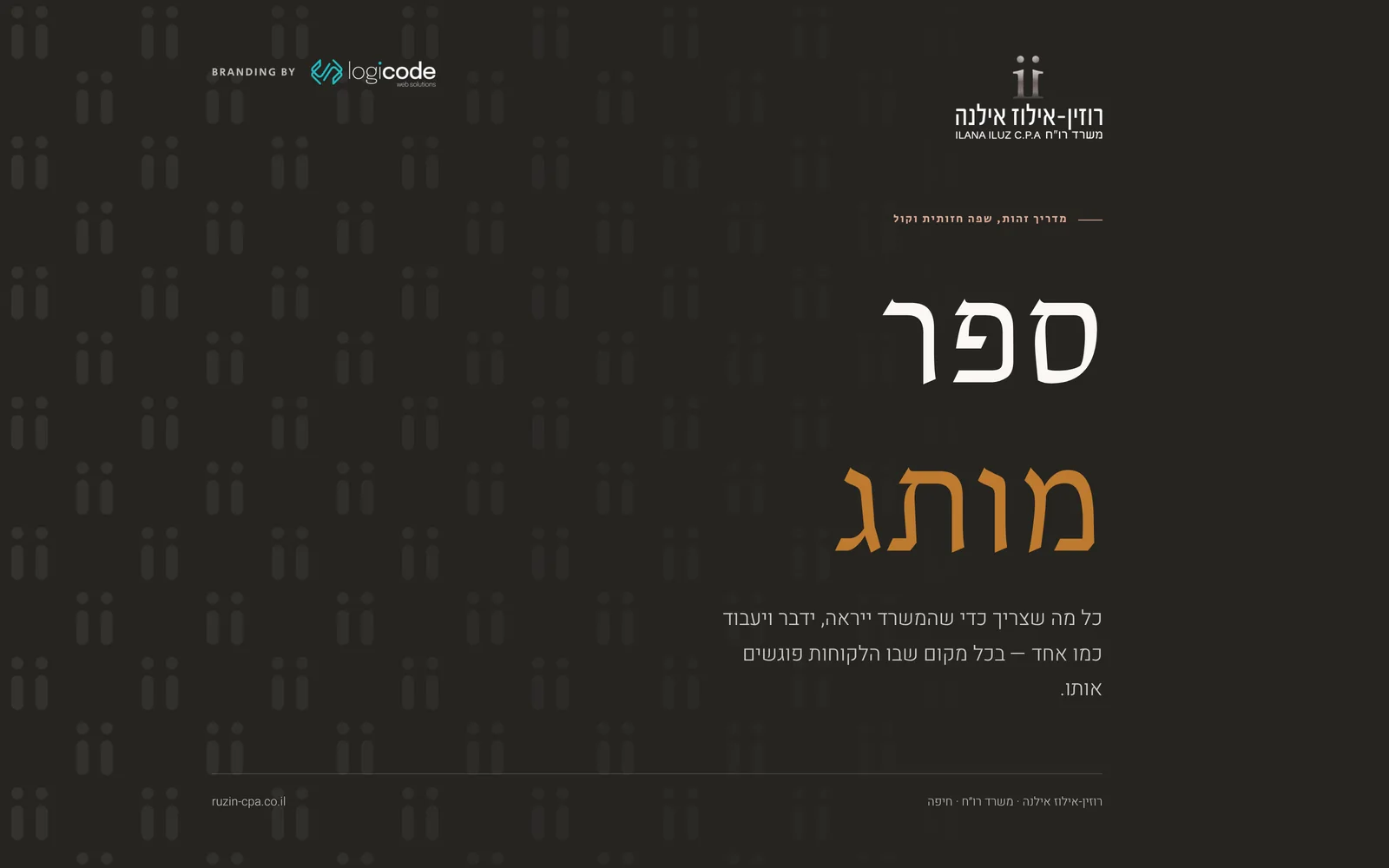
Ruzin-Iluz: an identity built around the ii mark

The ii mark, a graphite, paper and copper palette, three typefaces, the ii pattern and a full brand book for a Haifa accounting firm: an identity as calm and precise as the work itself.

Read the case study
Branding a book and its digital world

The Great Poop Book: from one cover to a design system

A logo derived from the handwriting on the cover, three core colors, three typefaces, voice principles, illustrations, a 10-chapter brand book and a design system the store website was built from.

Read the case study

What does the UX/UI design include?

Good interface design is the result of a process and not of a moment of inspiration. These are the stages and deliverables:

  • Users and goals: who uses it, what they are trying to achieve and which business action matters most.
  • Flows and user journey: mapping the steps from arrival to order or enquiry, and removing every unnecessary obstacle on the way.
  • Wireframes: laying out content and actions on every screen before any color is applied, to approve the logic.
  • UI design in the brand language: colors, typography, components and touch states for every screen, on desktop, tablet and mobile.
  • An interactive prototype: a clickable version, to experience and adjust before a line of code is written.
  • Built-in accessibility: contrast, touch sizes, reading order and screen reader support, in line with the Israeli standard and WCAG.
A brand design system: colors, typefaces and components

UX/UI design that became a product

Real screens from apps we designed and developed, from specification to the device. Open any of them for the full story.

App for an online store

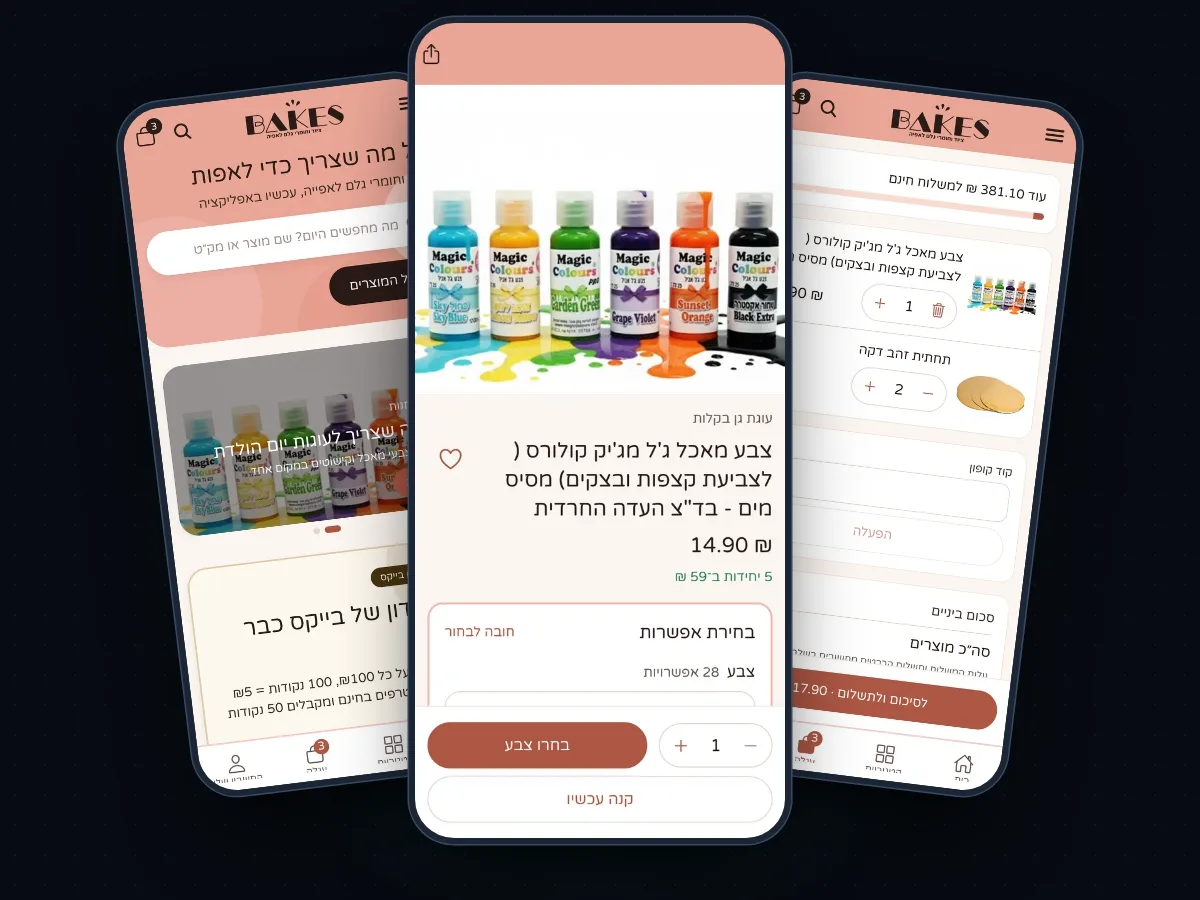
Bakes: the store in the customer's pocket

An app wired into the existing store: the same basket, prices and loyalty club. Payment stays on the secure website and notifications respect the Sabbath.

Read the case study
Field app for crews

Fredi Furniture Industries: a driver and measurer app

A mobile app that shows each driver and measurer only their own daily schedule, updates stop status in real time and collects a digital signature from the customer.

Read the case study
App for clinic clients

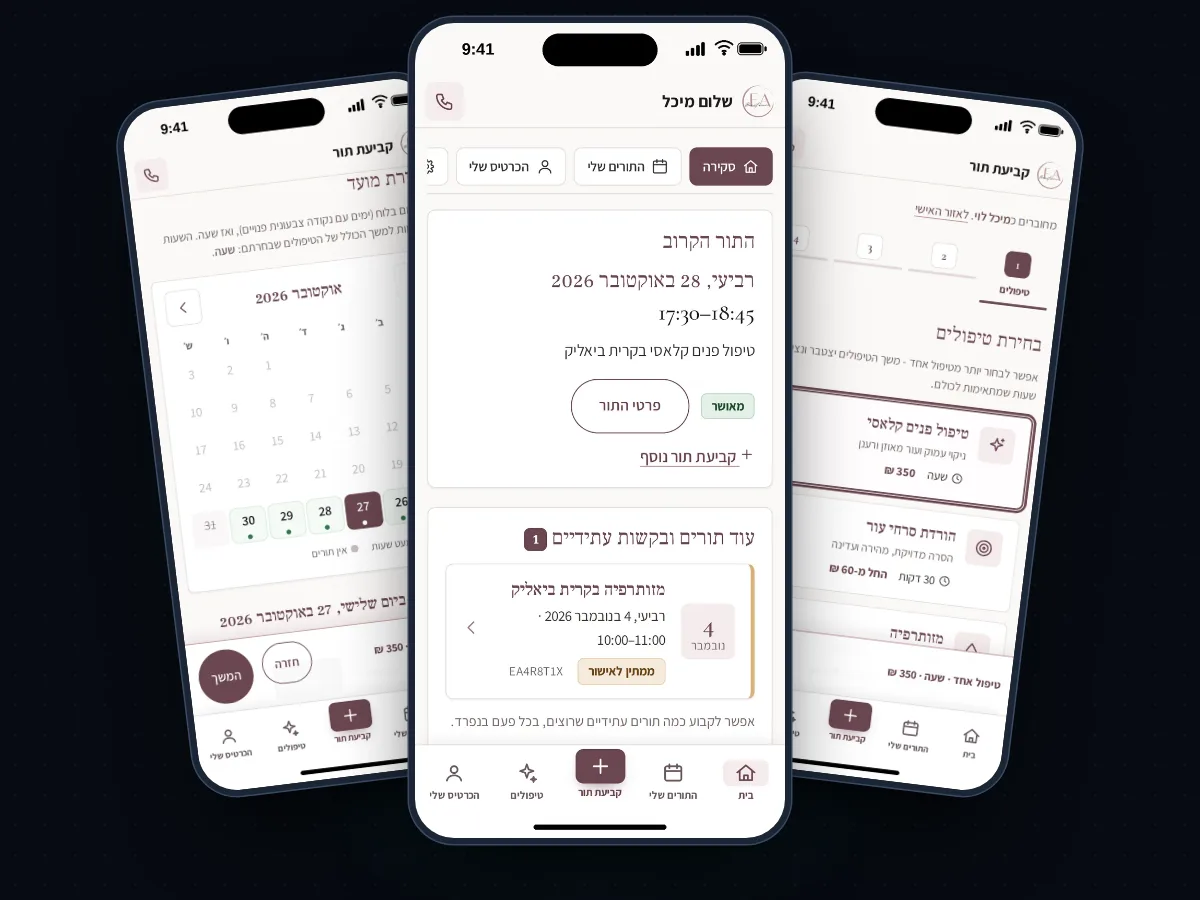
Ela Alzami: the clinic in the clients' pocket

Four-step booking, upcoming appointments and a client card, on Android and iPhone. Installed in one tap from the home screen, with no app store and with privacy built in.

Read the case study
Attendance and location app

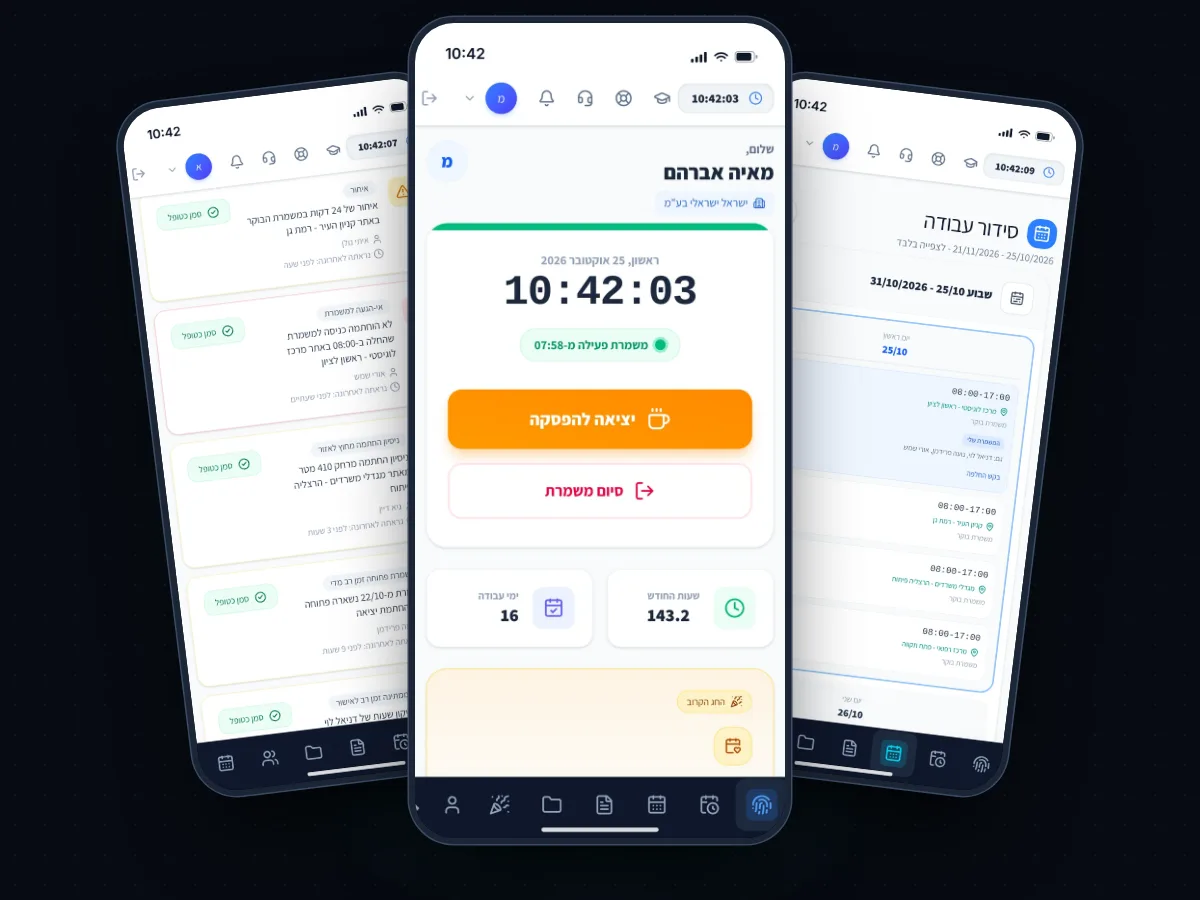
Just In: a smart time clock on the phone

Employees clock in and out from the phone with location verification, on iPhone and Android, with no app store: a link by SMS and the app is installed in one tap.

Read the case study

More apps we developed:The BarkBoard dog boarding app

From strategy to a living brand, in clear stages

Every stage is documented and approved by you before the next one begins, with no surprises along the way.

01

Discovery and strategy

A conversation about the business, the audience and the competitors, and a definition of values, positioning and tone of voice from which every design decision is derived.

02

Visual identity

A mark and logo, a color palette, typefaces and icons, in a few initial directions that converge on one approved direction.

03

UX/UI specification and design

Flows, wireframes and a design for every screen of the website or app, including an interactive prototype.

04

Brand book and design system

Documenting the identity and the interface components so everyone who works with the brand, today and in the future, can apply it correctly.

05

Application and development

Moving from design to clean code by our developers, and applying the identity in print, social media and marketing materials.

06

Support and continuation

Updates, new applications and expansion of the design system as the business grows, so the brand stays consistent.

Brand, design and code with the same team

In most cases one designer hands over files and another developer has to decode them. With us the team that designs is the team that develops, so the design is made from the start to be implemented quickly, accessibly and without compromise:

  • A design system that becomes code: the colors, typefaces and components in the brand book are exactly what loads on the site.
  • Design that respects performance: typefaces and graphics chosen also by weight and load time, for the sake of user experience and SEO.
  • A structure ready for SEO: a heading hierarchy, images and page structure decided already at the design stage.
  • One point of accountability: no coordination between vendors. Whoever defined the brand accompanies it until it goes live.
A digital application of a brand identity: a website and social media

What is business branding and how is it different from logo design?

Business branding is the process in which a company defines who it is, who it speaks to and what sets it apart, and turns that into a consistent visual and verbal language. Logo design is only one part of it. A complete brand also includes colors, typefaces, icons, a tone of voice, usage rules and applications on the website, the app, in print and on social media.

The difference shows when the business grows. Without a defined identity, every document, post and website page looks different. With a brand book and a design system, everyone who works with the business knows exactly how the brand looks and what not to do to it. The clearest example is the Ayelet Insurance and Finance branding, where we built a full language around an existing logo without changing a single line of it.

  • Brand strategy, positioning and tone of voice
  • A logo and brand mark in versions for every use
  • A color palette, typography and icons
  • A brand book and a digital design system
  • Applications: website, app, print and social media

UX/UI design for websites and apps: why it affects sales

UX/UI design decides whether a visitor understands within seconds what you offer and manages to order, call or leave details. UX is the whole experience: the flow, the order and the speed. UI is the design you see: buttons, text, colors and spacing. An in-depth guide to the logic behind this appears in the article on the psychology of UX/UI design.

We start from the specification of users and the business goal, build flows and wireframes, and hand an interactive prototype for approval before any code is written. The design is accessible from the start, in line with the Israeli accessibility standard 5568, which saves costly fixes after launch. Real screens can be seen in the Fredi field app and the Bakes app.

What our business branding process looks like, step by step

The process starts with an introductory conversation about the business, the audience and the competitors, continues to a visual identity in one approved direction, and moves on to interface design, a brand book and a design system. Application and clean-code development come at the end, followed by ongoing support. Every stage is documented and approved by you before moving on.

When the brand is built together with a website or an app, we first write a specification, as explained in the guide on how to write a software specification, and at the end we go through the website launch checklist. The scale of the investment can be estimated with the cost calculator and the guide to how much a website costs in 2026.

  • Discovery and strategy: values, positioning and tone of voice
  • Visual identity: mark, logo, colors, typefaces and icons
  • UX/UI specification and design, including an interactive prototype
  • A brand book and a design system
  • Application and clean-code development, and ongoing support

Rebranding: when a refresh is enough and when you need a new identity

Not every business needs to start from scratch. When a strong logo already exists, a full language can be built around it and the logo left as it is. That is what we did for Ayelet Insurance and Finance, and the result is the same logo with colors, a typeface, icons and a design system that connect the website, social media and documents. When the existing identity does not tell the right story, as in the case of the law firm of Motlak Badran, a new identity is built around one central idea.

Choosing correctly between a refresh and a rebrand is done in the specification call, after checking what already works. In the Ruzin-Iluz branding and the branding of The Great Poop Book as well, we started from what existed and built on it instead of replacing everything.

Branding and design in Haifa and across Israel: who the service suits

We are a software development company in Haifa and work with businesses from across Israel and abroad. The branding and design service suits businesses that are starting out and want a professional identity from day one, businesses that have grown and whose look is no longer consistent, and anyone building a website or an app who wants the design and the code to come from the same team.

We carry the design on into website development or app development with the same team, and branding can also be ordered separately. Past work can be seen in the portfolio and all services on the our services page. For a no-obligation introductory call you can reach us through the contact page.

Further reading

// FAQ

Frequently asked questions

What does a business branding service include?
A complete business branding service includes brand strategy and positioning, a logo and brand mark in versions for every use, a color palette, typefaces and icons, a brand book and a digital design system, as well as applications such as a business card, stationery, social media, a website and an app. The scope is tailored to each business.
What is the difference between logo design and business branding?
Logo design creates a single mark. Business branding builds a whole system around it: strategy, colors, typography, tone of voice and usage rules. The logo identifies the business, and the brand makes the customer remember it and trust it at every touchpoint, from the website to the business card.
How much do business branding and UX/UI design cost?
The price depends on the scope: whether a full brand or a refresh is needed, how many screens or pages must be designed, and whether a brand book and a design system are also requested. After an introductory call we give an itemised quote. For a first estimate you can use the cost calculator.
What is a brand book and why do you need one?
A brand book is a document that explains how to use the identity: strategy, logo, colors, typefaces, icons, application examples and what not to do. It makes sure designers, developers and print suppliers present the brand consistently even when the team changes. An example can be seen in the Ruzin-Iluz branding.
How long does a branding process take?
The duration of the process depends on the scope and the speed of approvals. A full brand goes through stages of strategy, visual identity, interface design, a brand book and application, and each stage is approved before the next. In the introductory call we present a detailed schedule tailored to your project.
Can you rebrand without replacing the logo?
Yes, when the existing logo is strong. It can be analysed, with colors, a typeface and icons derived from it, to build a complete design language without changing a single line of it. That is what we did in the Ayelet Insurance and Finance branding, and in the specification call we check whether your logo suits this approach.
What is the difference between UX and UI?
UX is the user experience: the flow, the order, the speed and what happens when a user makes a mistake. UI is the visual design of the interface: buttons, colors, typefaces and spacing. Good design needs both, because a beautiful interface that is hard to use does not sell, and a simple interface that looks unprofessional does not convince.
What is an interactive prototype and why does it matter?
An interactive prototype is a version of the website or app that you can click and move between screens, without real code. It lets you experience the flow and fix it before development, saving costly changes. We worked this way on apps such as the Ela Alzami app.
Do you also develop the website or app you designed?
Yes. With us the designers and developers work in the same team, so the design is made to be implemented quickly and in clean code. The code is written by developers and not by AI. You can continue to website development or app development, or order only the design.
Is the design accessible under the Israeli standard?
We plan accessibility already at the design stage: color contrast, touch sizes, reading order and screen reader support, in line with the Israeli standard 5568 and WCAG. This saves fixes after launch. Details appear in the article on website accessibility under standard 5568.
Do you work with businesses outside Haifa?
Yes. We are a software development company in Haifa and work with clients across Israel and abroad. The process runs through video calls and shared documents, and clients approve every stage remotely. You can get to know the work in the portfolio.

Ready to build a brand nobody mistakes for another?

A short, no-obligation introductory call, and together we will work out whether you need a new brand, a refresh or an interface design for a website and an app.