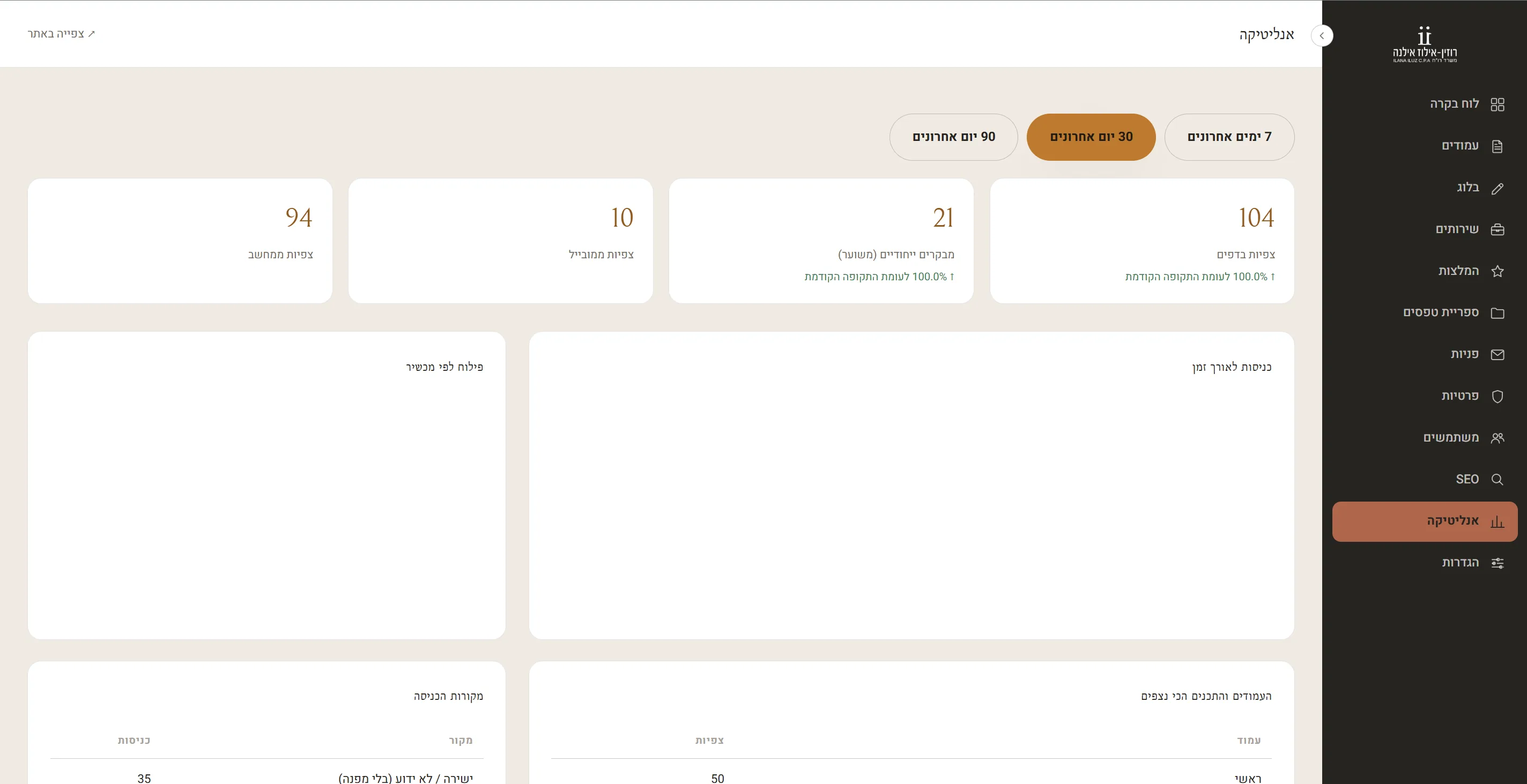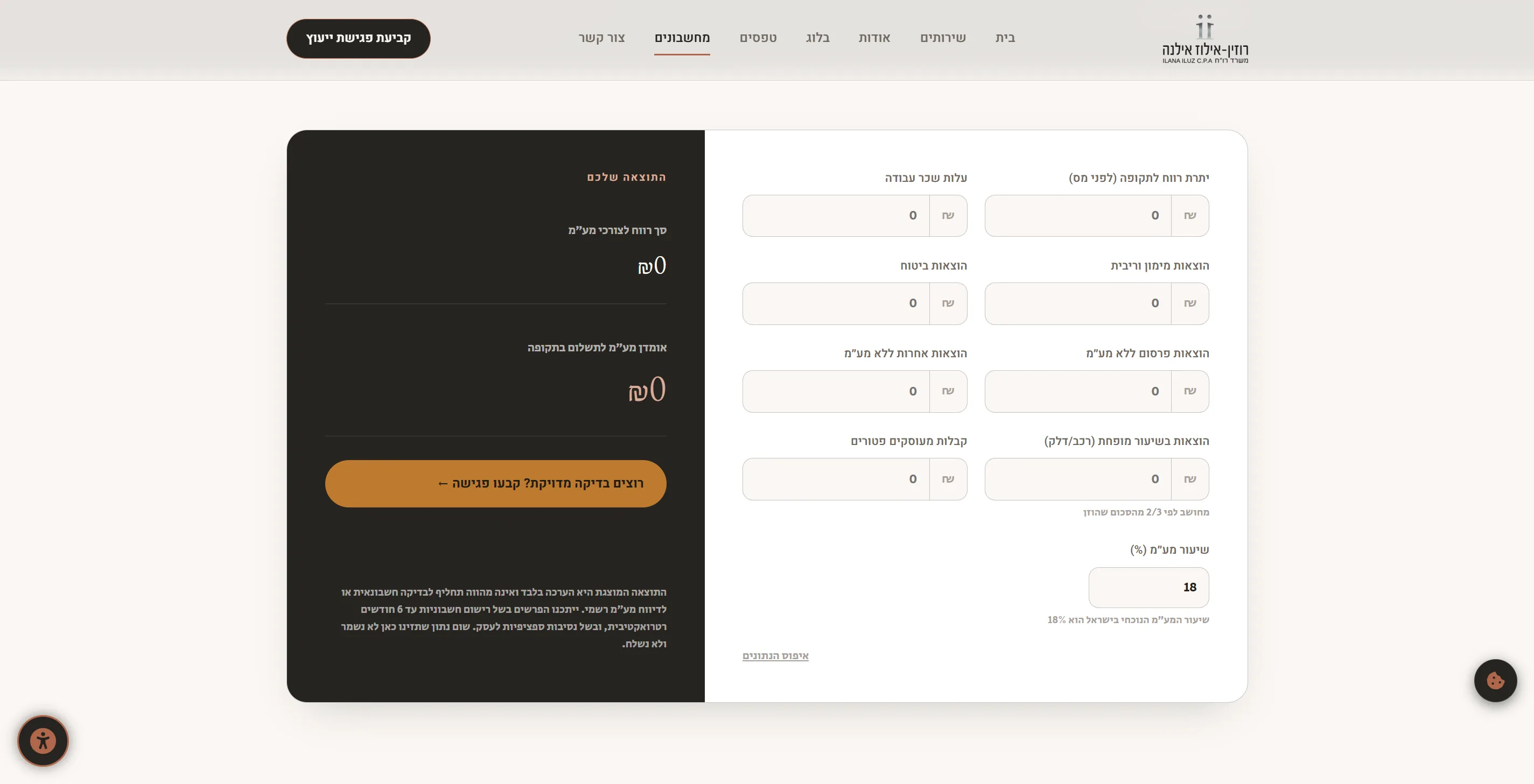
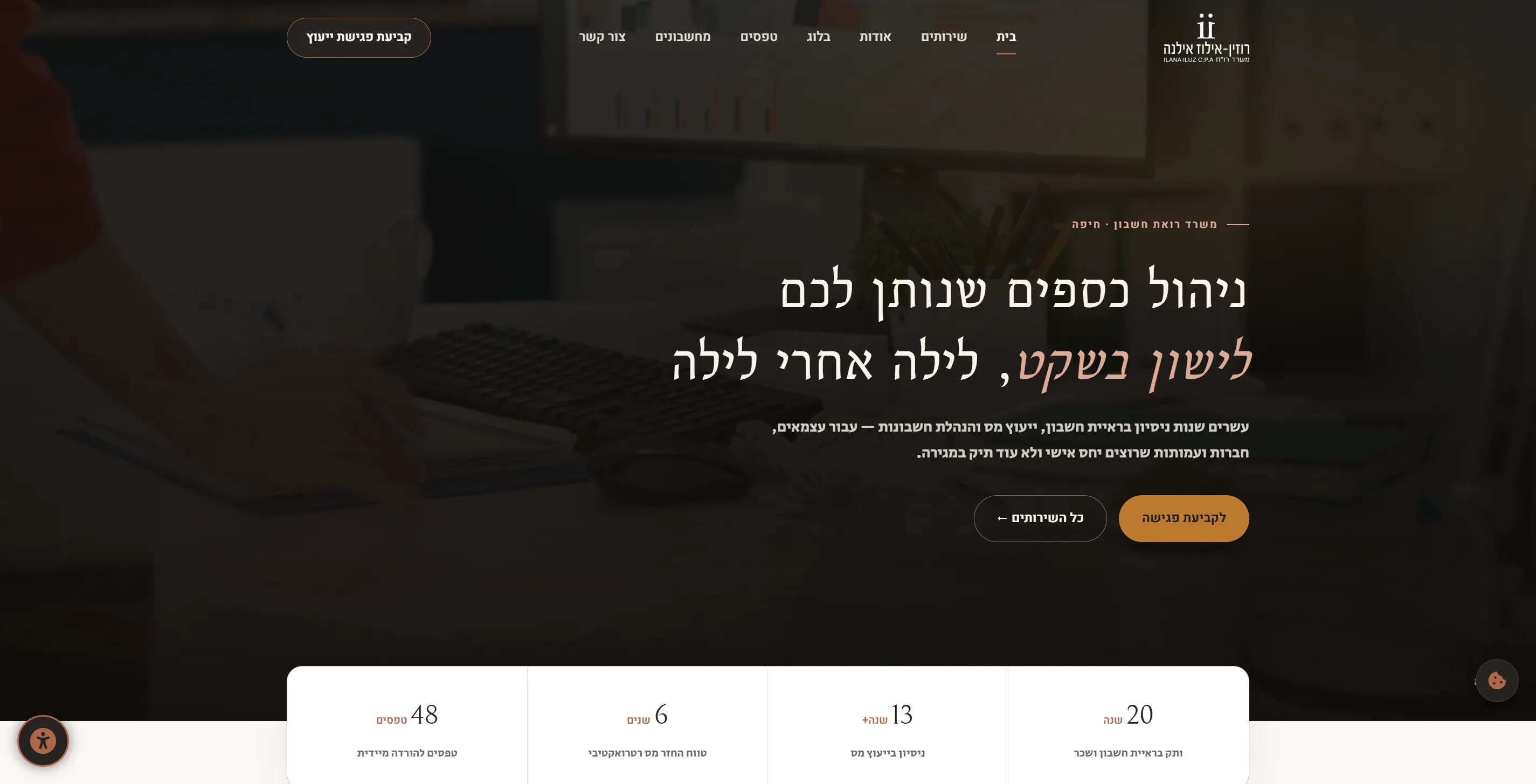
The firm's previous website ran on WordPress — a generic solution that failed to reflect the professional and boutique standards of Ilana and her team. Beyond the branding issue, WordPress brought its familiar weaknesses: constant dependence on external developers for maintenance, a broad attack surface, and load times that didn't support competitive SEO in a field where clients compare multiple firms.
Moreover, the old site had a significant SEO history — Hebrew URLs that had been ranking on Google for years. Any technical migration had to preserve these exact URLs, or the firm would instantly lose all its accumulated ranking.
The main technical challenge, however, was infrastructural: like most small businesses in Israel, the firm's hosting is standard Shared Hosting — without SSH access, server commands, or any ability to 'deploy' code in the modern development sense. Any solution requiring CLI, containers, or server-side build processes was out of the question.
Finally — as a certified CPA, Ilana is subject to two Israeli regulatory requirements that most corporate sites ignore: the Equal Rights for Persons with Disabilities Law (web accessibility) and Amendment 13 to the Privacy Protection Law (cookie consent and a structured process for data requests/deletion). Both had to be integral parts of the site, not afterthoughts.