
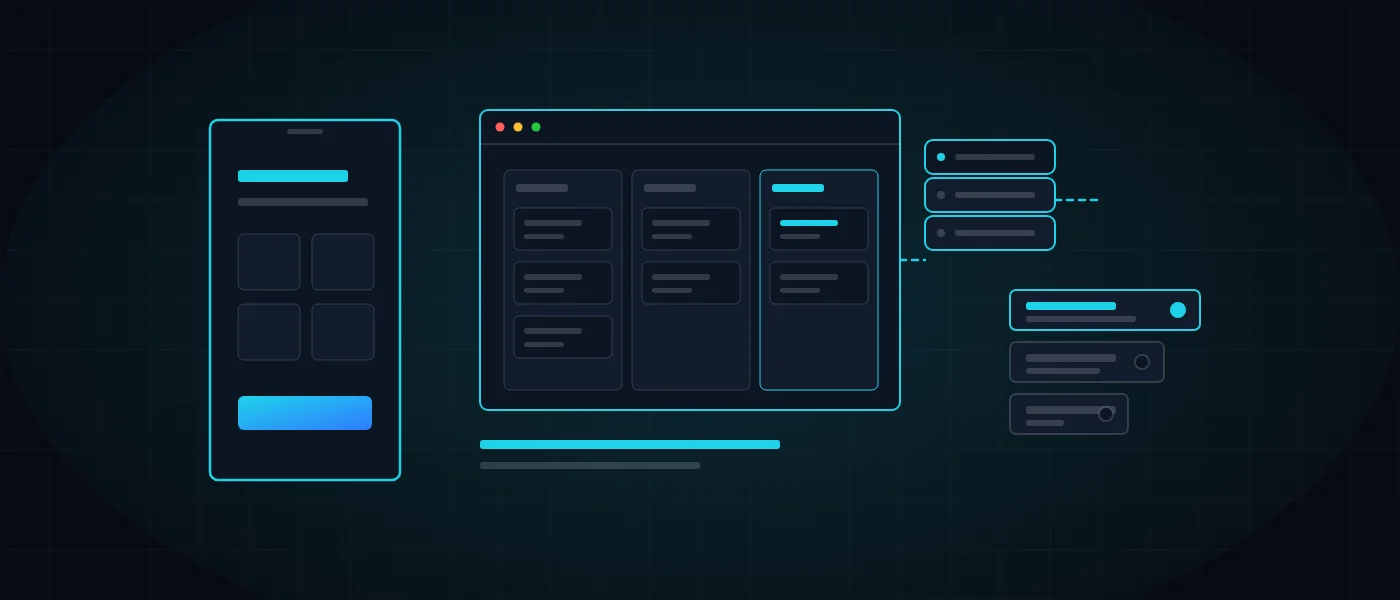
How much does it cost to develop an app? And how much does it cost to develop a CRM system? These are the questions business owners ask before almost every software project, and the honest answer to both is that it depends on scope. That is not evasion: an app and a management system are software written around the needs of one specific business, and the price is a function of what gets built into them and who works on them.
This guide contains no price list, because a price list that is not based on a specification is a guess. It covers the factors that set the price, fixed price versus time-and-materials, ways to reduce cost without hurting quality, warning signs in a cheap quote, and questions to put to a vendor. At Logicode, a software development company in Haifa, we do not assemble systems from ready-made parts. We develop them in clean code written from scratch by human developers, not by AI, so we can explain from experience how such a price is built.
How much does it cost to develop an app, and what actually sets the price?
How much does it cost to develop an app? The cost follows the scope of the work: how many screens and actions there are, who the users are, what the app connects to and how polished it must be. Behind every screen there is work by a designer, an app developer, a server developer and a QA tester, so two apps that look alike in a screenshot can be very far apart in cost.
It helps to separate what users see from what they do not. Users see screens, but a large part of the work sits behind them: a server that manages the data, an admin interface for your team, permissions, notifications and connections to existing systems. A quote that prices only the screens prices only part of the project.
Before pricing an app it is also worth asking whether it is the right tool at all. Sometimes a website or a web system is enough, and then the cost is lower. We go through those considerations in app or website: a decision guide, and in how much it costs to build a website you will find the same method applied to websites.
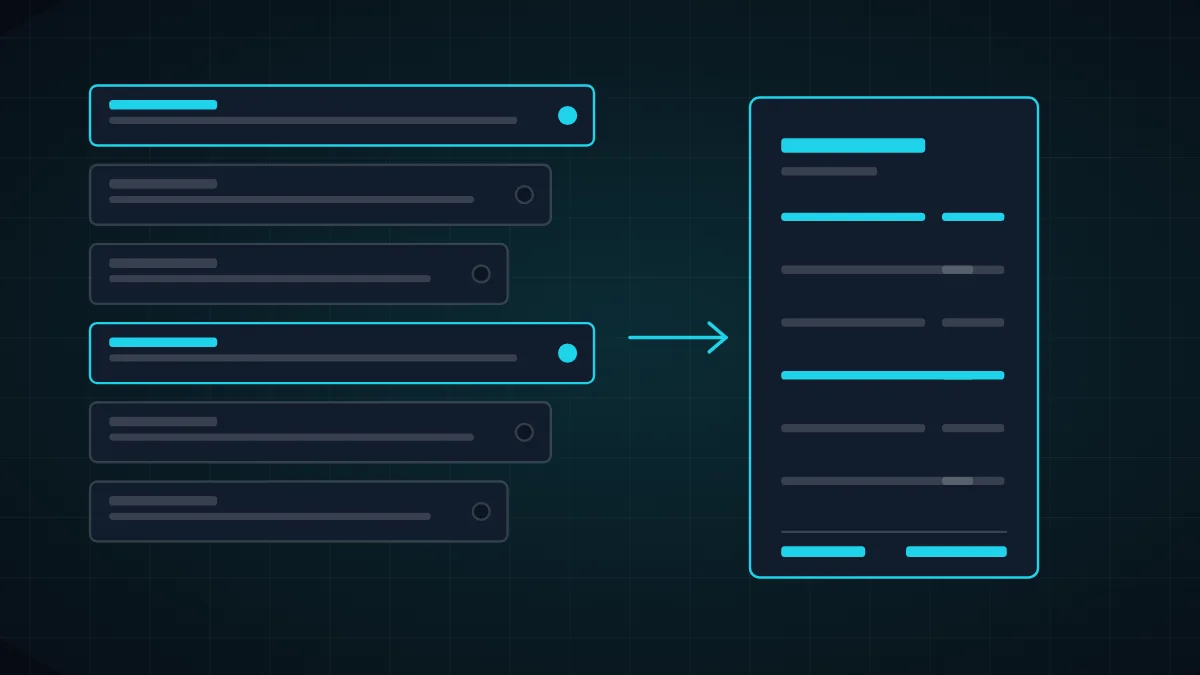
- Scope: the number of screens, processes and actions the system must handle.
- Users and permissions: how many user types there are, and what each one may see and do.
- Integrations: connections to payments, accounting, WhatsApp, email or existing systems.
- Platform: native for Android and iOS, or a cross-platform solution.
- Existing data: migrating and cleaning information from Excel or an old system.
- Design: the depth of the user experience and the level of screen design.
- Security and compliance: protecting personal data and meeting legal requirements.
- Ongoing operation: hosting, maintenance, updates and support after launch.
What affects the cost of developing a mobile app?
The first decision that affects the budget is the platform. A native app is written separately for each operating system and suits high performance or deep hardware access. A cross-platform app is written from one code base for Android and iOS, for example with Flutter or React Native, and usually saves time because every new capability is written once. No single option suits everyone, and the decision depends on what the app must do.
Beyond the platform, device capabilities add work: GPS location, the camera, push notifications, working without a connection and syncing later, in-app payment and biometric sign-in. Each of these requires development and testing on real devices and versions, so it is worth listing which are essential for the first version and which can wait.
Publishing to the stores is also part of the project: preparing store assets, meeting Google Play and App Store requirements and the review process, and later updates when the operating systems change. An example from our work is the Bakes app, an Android app wired into the existing online store, so the basket and prices are shared and payment stays on the secure website. Building on existing infrastructure is one way to keep scope reasonable.
We present the whole project path, from specification and design to publishing and maintenance, on the page about Android and iOS app development.
- Native for both operating systems versus a shared code base.
- Device capabilities: location, camera, notifications and files.
- Offline operation and data sync.
- A server and admin interface connected to the app.
- Testing on real devices and versions, and publishing to the stores.
How much does a CRM system or portal cost, and what moves the price?
A CRM is a system for managing customers, leads, quotes and deals, and a custom system is built around the business’s own process rather than a generic template. The cost of developing a CRM system depends on how many processes it covers and how deeply. A system that manages only contacts and leads is very different from one that also handles quotes, invoices, tasks, inventory and reports, so a CRM price shown without a specification is only a rough estimate.
The factor that surprises people most is permissions. Every additional role, such as a salesperson, manager, technician, accountant or external customer, requires a definition of what it sees, what it edits and what is recorded in the change log. A portal, meaning a personal area for customers, suppliers or employees, brings external users, secure sign-in and separation between the data of different organizations. That is why the cost of developing a portal is set largely by permissions and security, and a portal usually needs more planning and testing than an internal interface.
Integrations and data migration are the two components most often underestimated. Connecting to WhatsApp, accounting, the website or payments means dealing with APIs, failures and changes on the other side, as explained in the article on integrations between systems. Migrating data from Excel or an old system requires cleaning duplicates and mapping fields, and that process is described in the guide to moving from Excel to a CRM.
To understand what actually gets built, it helps to look at examples. OmniCore, the system we developed for repair labs, is built around one defined process, from a repair ticket to a message to the customer. You can read about the logic behind such systems, including the use of artificial intelligence, in the article on AI-driven CRM, and we present the system development service itself on the page about advanced systems development.
- The number of modules: leads, customers, quotes, tasks, inventory, invoices and reports.
- The number of roles and permissions, including external users in a portal.
- Integrations with WhatsApp, email, payments and accounting.
- Migration and cleaning of existing data.
- Automations, alerts and management reports.
How is a quote built: fixed price or time-and-materials?
A good quote is a list of components, not a single sum. It is usually made up of specification, design, development of each module or screen, integrations, data migration, QA and security testing and launch, and separately the recurring costs of hosting and maintenance. With that breakdown you can see what is included, compare vendors and decide what to defer to the next phase.
A fixed price suits a scope that is known and documented: the vendor commits to a defined deliverable for an agreed sum. Its advantage is budget certainty, and its condition is a clear specification, because every change in scope is handled as a separate change request. Time-and-materials, or a retained team, suits requirements that are still forming or a product that evolves in phases, and it offers flexibility at the price of less certainty about the final sum.
No method is right in every situation. What matters is that the method is agreed in advance, that it is defined what happens when requirements change, and that you receive progress reports you can follow. A fixed price without a specification is a risk for both sides, and hours with no cap and no reporting are a surprise on the invoice. The document that makes a fixed price possible is explained in the guide on how to write a software specification.
Remember the costs that come after launch too: hosting, backups, security updates, support and further development. They are part of the total cost, and for an app there are also updates to match new versions of the operating systems. This principle is explained in the guide to website maintenance, and it holds for systems as well.
- An itemized breakdown rather than one total.
- An explicit list of what is not included.
- A definition of what happens when you request a change.
- Payment stages tied to delivered results.
- Ownership of the code, the data and the access credentials at the end of the project.
How can you reduce cost without giving up quality?
Anyone checking how much it costs to develop an app, and wanting to control the cost, should reduce scope rather than quality. Instead of building everything at once, you start with a first phase containing only what is essential for the business to begin working with the system or app, measure real usage and build the next phase on what you learned. This approach is called a focused first version (MVP), and the investment in each phase is small and defined.
The condition for this is a specification, and it is the most worthwhile investment in the project. When it is written down what gets built, for whom and under which rules, you can price accurately, defer components deliberately and avoid duplicate work. A missing specification is one of the common reasons for extensions that surface midway and make projects more expensive. There is more detail in the guide on system specification.
Sometimes an off-the-shelf product covers part of the need and lowers the starting cost. When to stay with an off-the-shelf product and when to move to custom development is explained in the article on off-the-shelf products versus custom systems. The right comparison also includes subscription fees over time, limitations and customizations you would have to pay for.
And there are areas where you do not save: security, quality assurance and code that can be maintained. Cutting them looks cheap in a quote and collects its price later, in faults, vulnerabilities and the need to rewrite.
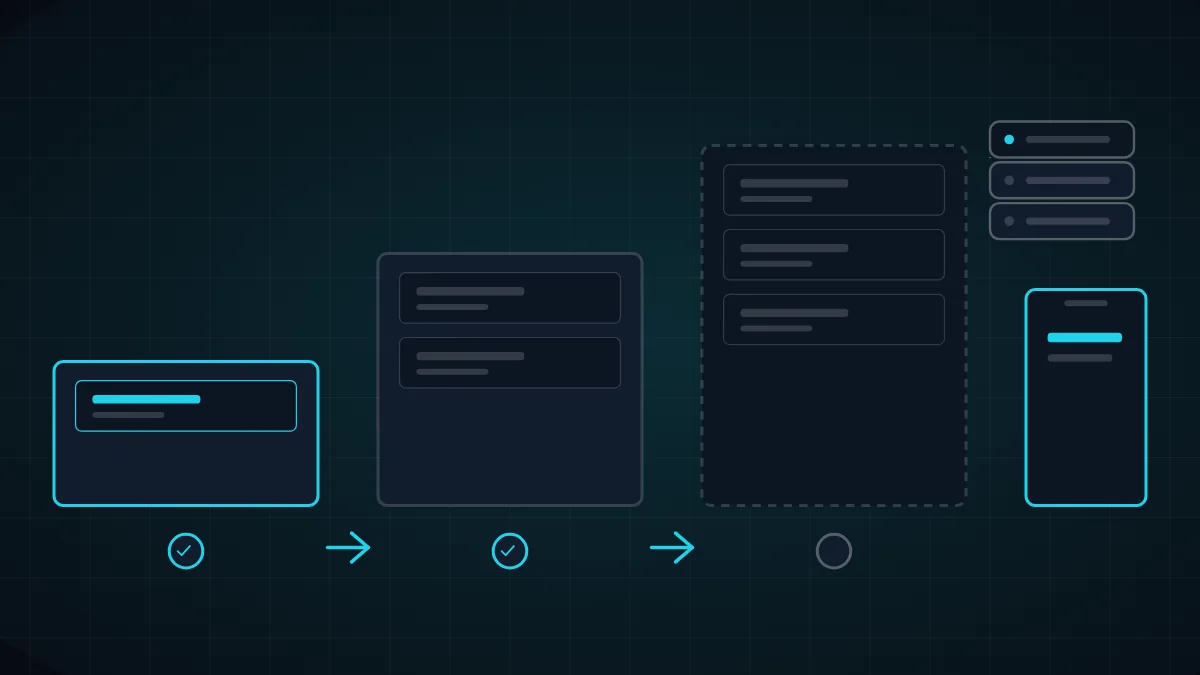
- A focused first phase that covers only the core process.
- Deferring nice-to-have features to a later phase, according to a priority list.
- Reusing existing infrastructure, for example connecting to a website or store that already runs.
- A written specification and a prototype before any code is written.
- An agreed change-request process, so scope does not grow without a decision.
Warning signs in a very cheap quote
A cheap quote is not necessarily a problem, but when the gap from the other quotes is large, it is worth finding out where it comes from. The difference does not disappear: it shows up as a missing component, as work that was postponed or as an extra charge later. So read the quote before you look at the sum.
The first sign is a price given before anyone asked about your needs. A real quote rests on a specification call, and a sum offered in the first conversation usually rests on a template rather than on your business. The second sign is a lack of detail: without a list of components you cannot know what is included, and without a list of what is excluded you cannot know what will be added.
The third sign is a missing work process. If there is no specification, prototype, QA, security testing or trial period, someone will skip a stage and the result will reach you as faults. The fourth sign concerns ownership: make sure the code, the database and the hosting and store accounts are registered in your name, and that you do not depend on the vendor in order to continue.
One more point is the code itself. A system assembled from ready-made parts without understanding looks good in a demo but is hard to maintain and extend. That is why we write clean code from scratch, by developers, and show clearly what is included. You will find more on choosing a vendor in the article on how to choose a software development company, and on the security that must be part of every price in website security in 2026.
- Is there an itemized list of components and also a list of what is excluded.
- Are specification, design and testing included or priced separately.
- Do security, backups and maintenance appear in the quote.
- Who owns the code, the data and the hosting accounts.
- Is it clear who writes the code and how it is tested.
What should you ask a vendor, and how do you get an accurate quote?
An accurate quote is the product of a good conversation. When you contact vendors to find out how much it costs to develop an app or a system, prepare a short description: what the business does, which process you want to improve, who will work with the system and which systems already exist. The clearer the description, the narrower and more accurate the range you will receive.
To get an initial estimate before you even talk, you can use our cost calculator. You choose a project type, answer questions and receive an investment range with the components itemized, and monthly costs separately. The final price is set only after a specification call, and there is no contradiction in that: the estimate helps you plan a budget and the specification turns it into a quote.
In the conversation itself, ask questions that reveal how the vendor works. The answers show how professional the quote is and what to expect after you sign.
With us, a software development company in Haifa that works with clients across Israel and abroad, the process starts with a short specification call, continues with a written specification before any code, and ends with an itemized quote. If you have an idea for an app, a CRM system or a portal, get in touch and we will go over the needs together.
After launch there is also a running cost of hosting, security and maintenance, so it is worth asking for it to appear in the quote as a separate line.
- What does the specification process look like, and what will I receive at the end?
- What is included in the price, and what will be priced separately?
- Who writes the code, and is it written by human developers?
- How are change requests managed, and how do they affect the cost?
- What happens after launch: hosting, maintenance, support and updates?
- Who owns the code and the data, and how do you move to another vendor if needed?
More articles worth reading
- How Much Does a Website Cost in 2026?
- System Specification Example and How to Write One
- From Excel to a Custom CRM: When to Move